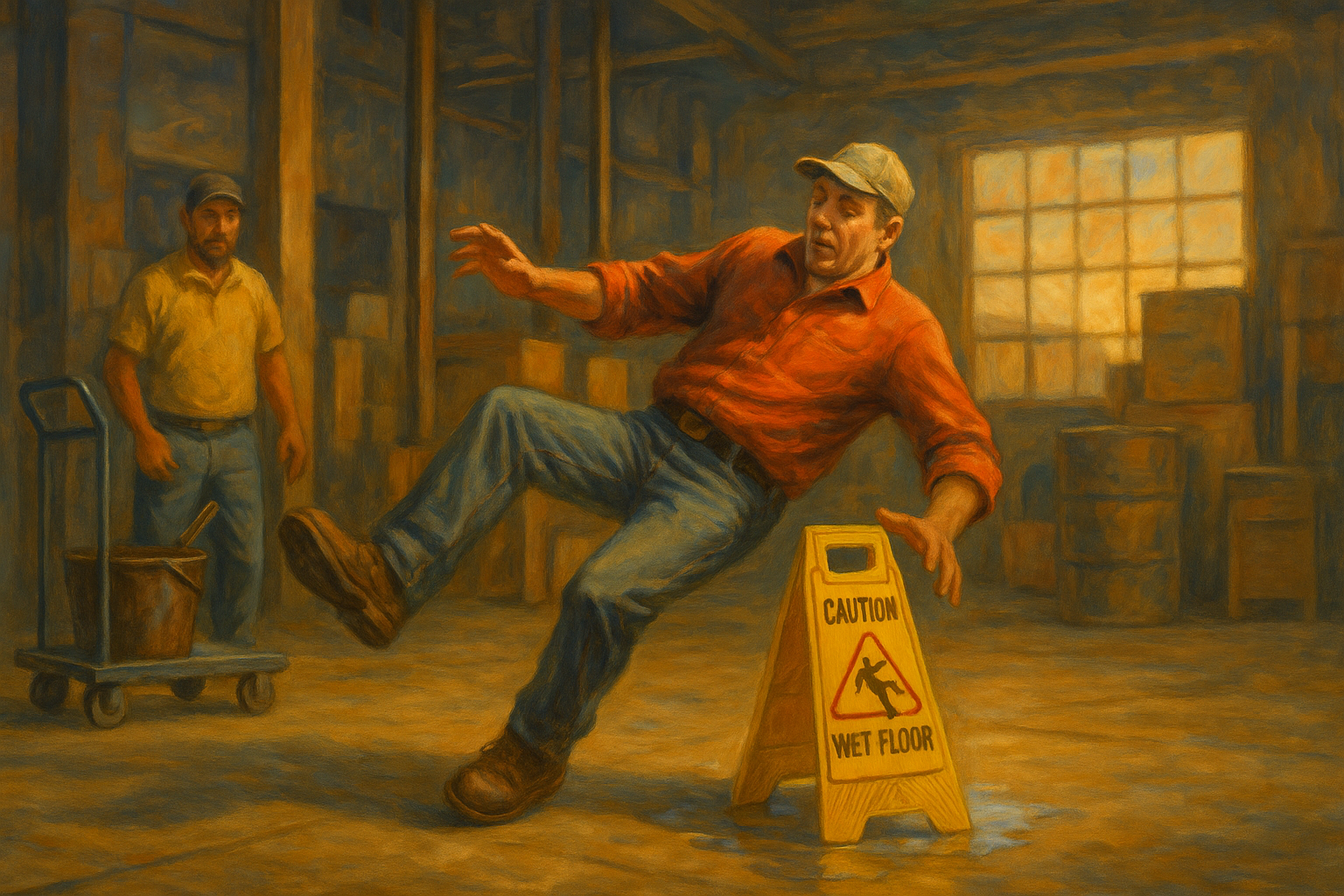
Slipping on a wet floor at work, tripping over cables in a back room, or falling on a loading dock can leave you seriously injured — and unsure what kind of case you have. Is it just workers’ compensation? Can it be a personal injury claim? Or both?
At Aldridge Teasdale, we talk to a lot of injured Oklahomans who know they’re hurt, but don’t know how their case fits into the legal system. This guide will help you understand when a work-related slip, trip, or fall might be more than just a workers’ comp claim — and when you should talk to an attorney.
1. Workers’ Compensation vs. Personal Injury: What’s the Difference?
In most on-the-job injuries, your first line of protection is usually workers’ compensation. Workers’ comp is designed to cover things like:
- Medical treatment for your work-related injury
- Portions of your lost wages while you’re off work
- Some long-term impairment benefits in serious cases
But workers’ comp is not the same as a personal injury claim. In a personal injury case, you may be able to seek additional compensation for:
- Pain and suffering
- Loss of enjoyment of life
- Full wage loss and future earning capacity
The key question is: Was someone other than your employer or co-worker legally responsible for causing your fall?
2. When a Workplace Fall Might Be a Personal Injury Case
A slip, trip, or fall at work becomes a potential personal injury case when a third party — not just your employer — contributed to the hazard. Examples include:
- Property owner liability: You’re working at a job site or building your company does not own, and you’re injured because of broken stairs, unsafe railings, or poorly maintained walkways.
- Contractor or vendor negligence: Another company leaves tools, cords, or debris in a walkway, and you trip and fall.
- Dangerous flooring or products: A flooring company installs slick tile with no proper grip, or a cleaning product leaves an unreasonably slippery surface without warning.
- Falls in shared areas: You’re hurt in a common area (parking lot, lobby, sidewalk) that a landlord, management company, or third party is supposed to maintain.
In these situations, you might have both a workers’ compensation claim and a separate personal injury claim against the third party.
3. Common Slip, Trip & Fall Hazards at Work
We see the same patterns again and again in workplace fall cases, including:
- Wet or freshly mopped floors with no warning signs
- Uneven flooring, broken tiles, or loose carpet
- Cords, boxes, or tools left in walkways
- Potholes or broken pavement in employee parking lots
- Poor lighting in hallways, stairwells, or exterior paths
- Worn or missing handrails on stairs and ramps
Just because the fall happened “at work” doesn’t automatically mean your only option is workers’ comp. The source of the hazard matters.
4. Signs Your Fall Deserves a Closer Legal Look
You should talk to an attorney about a potential personal injury claim if:
- Your injuries are serious (broken bones, head injury, back or neck damage).
- You may be out of work for weeks or months.
- The hazard involved another company, property owner, or product.
- The property owner or manager knew about the condition and didn’t fix it.
- There were prior complaints or similar incidents in the same area.
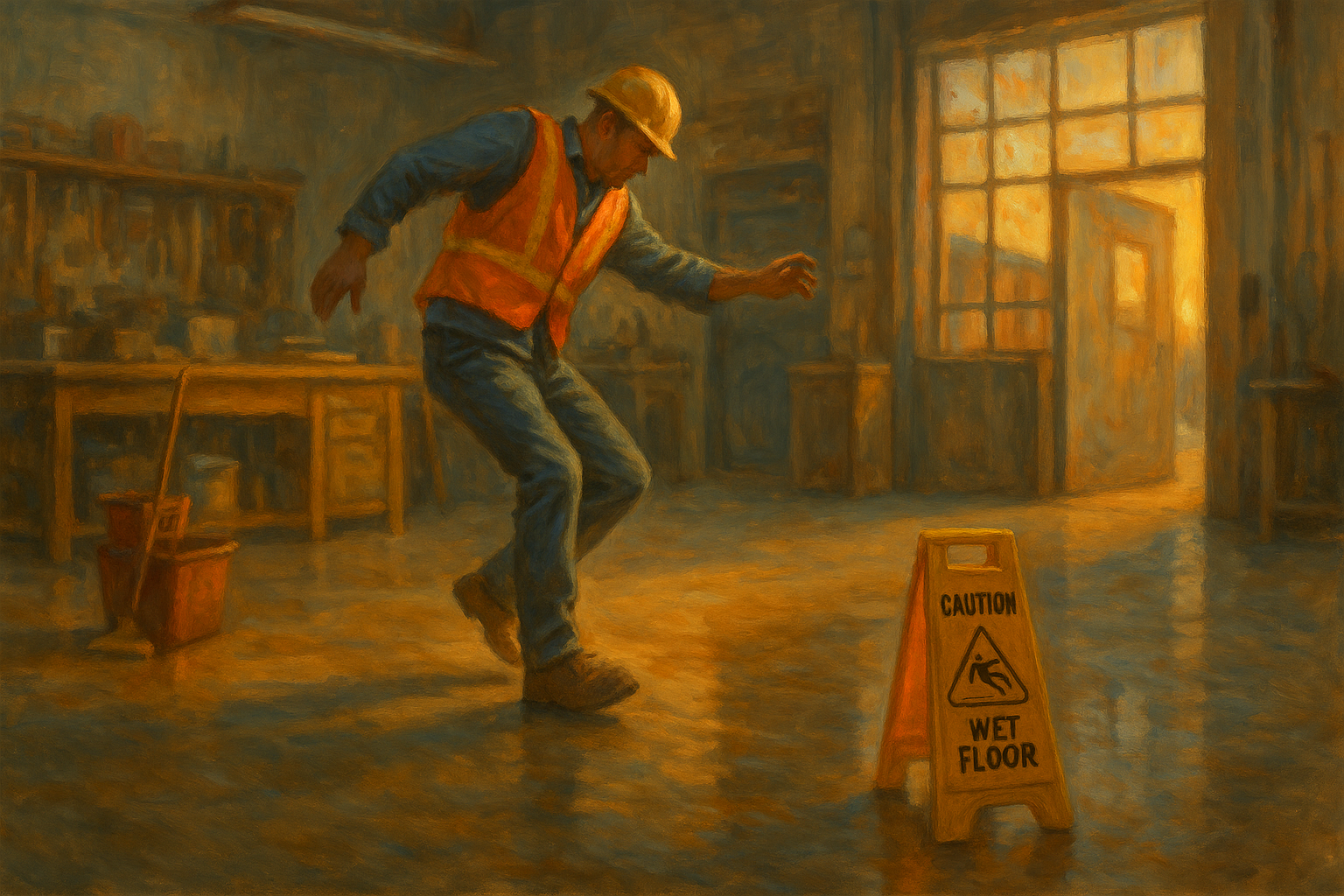
In many cases, we work alongside your workers’ comp benefits — not against them — by pursuing additional compensation from the responsible third party.
5. What to Do After a Slip, Trip, or Fall at Work
If you’re injured in a fall on the job, here are some important steps to take:
- Report the incident immediately to your supervisor or HR.
- Ask for an incident report and request a copy or take a photo of it.
- Take pictures of the hazard (spill, broken step, clutter, ice, poor lighting, etc.).
- Get contact information for any witnesses.
- Seek medical care as soon as possible and follow your doctor’s advice.
- Talk to an attorney before signing paperwork or giving detailed statements to insurers.
The sooner you get legal guidance, the easier it is to preserve evidence and understand all of your options — not just the ones the insurance company mentions.
6. How Aldridge Teasdale Can Help
At Aldridge Teasdale, we help injured workers understand whether their slip, trip, or fall is:
- Only a workers’ compensation claim, or
- A workers’ compensation claim plus a separate personal injury case
We investigate who owned or controlled the property, who created the hazard, and whether safety rules were ignored. Our goal is simple: make sure you’re not leaving money on the table when someone else’s negligence played a role in your injury.
Talk to an Oklahoma Injury Lawyer About Your Workplace Fall
If you slipped, tripped, or fell at work and aren’t sure what kind of case you have, you don’t have to figure it out alone. A quick conversation can help you understand your rights and your next steps.
Request your Free Case Review or call (405) 447-HURT today. We’ll listen to what happened, explain your options in plain English, and you pay nothing unless we win.
Internal Links:
Slip and Fall Overview |
Personal Injury Overview