Stillwater’s restaurant scene is unlike almost anywhere else in Oklahoma. The concentration of dining options along Washington Street, Sixth Avenue, and the corridors surrounding Oklahoma State University creates one of the highest-density food service environments in the state — fueled by a student population of more than 25,000, a steady stream of game day visitors, and a year-round local customer base that keeps restaurants operating at or near capacity on a regular basis.
That volume is good for business. It also creates exactly the conditions where slip and fall accidents happen — and where the question of who is responsible is not always as straightforward as it first appears.
If you were injured in a slip and fall at a Stillwater restaurant near OSU, here is what Oklahoma premises liability law says about liability and what steps you need to take to protect your claim.
Why High-Volume Restaurant Environments Near OSU Create Elevated Fall Risk
The restaurants surrounding Oklahoma State University operate in a uniquely demanding environment. Game day weekends, late-night service periods, and the constant churn of a large student population mean that these establishments frequently operate at volumes their staff and physical infrastructure were not always designed to handle comfortably.
That pressure creates real conditions for slip and fall hazards:
- Spilled beverages and food on dining room floors that go unaddressed during peak service rushes when staff are stretched thin
- Grease and kitchen residue tracked from back-of-house areas into dining rooms and restrooms during high-volume shifts
- Wet entryways during Oklahoma’s rainy seasons when hundreds of customers cycle through in a short window
- Overcrowded dining rooms where tables and chairs are pushed closer together, creating trip hazards in narrowed walkways
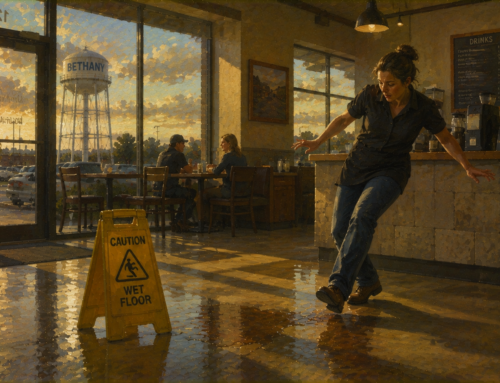
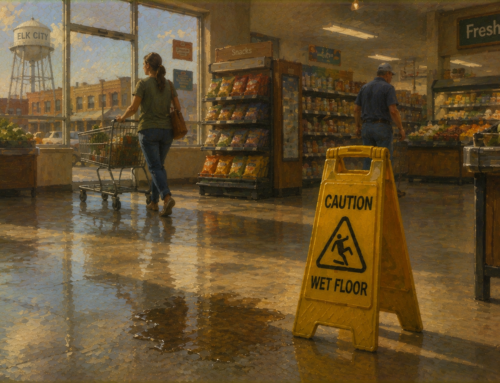
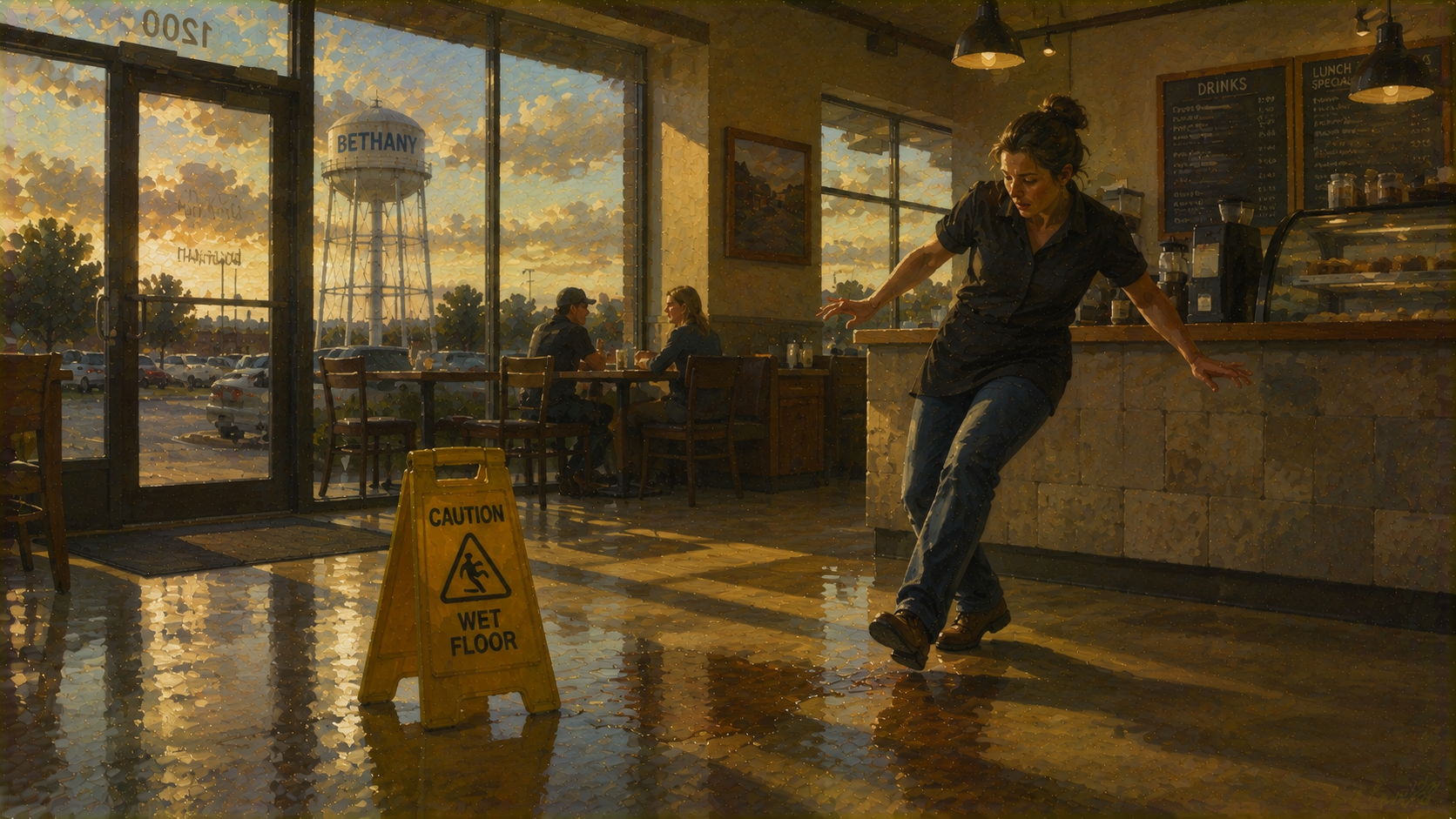
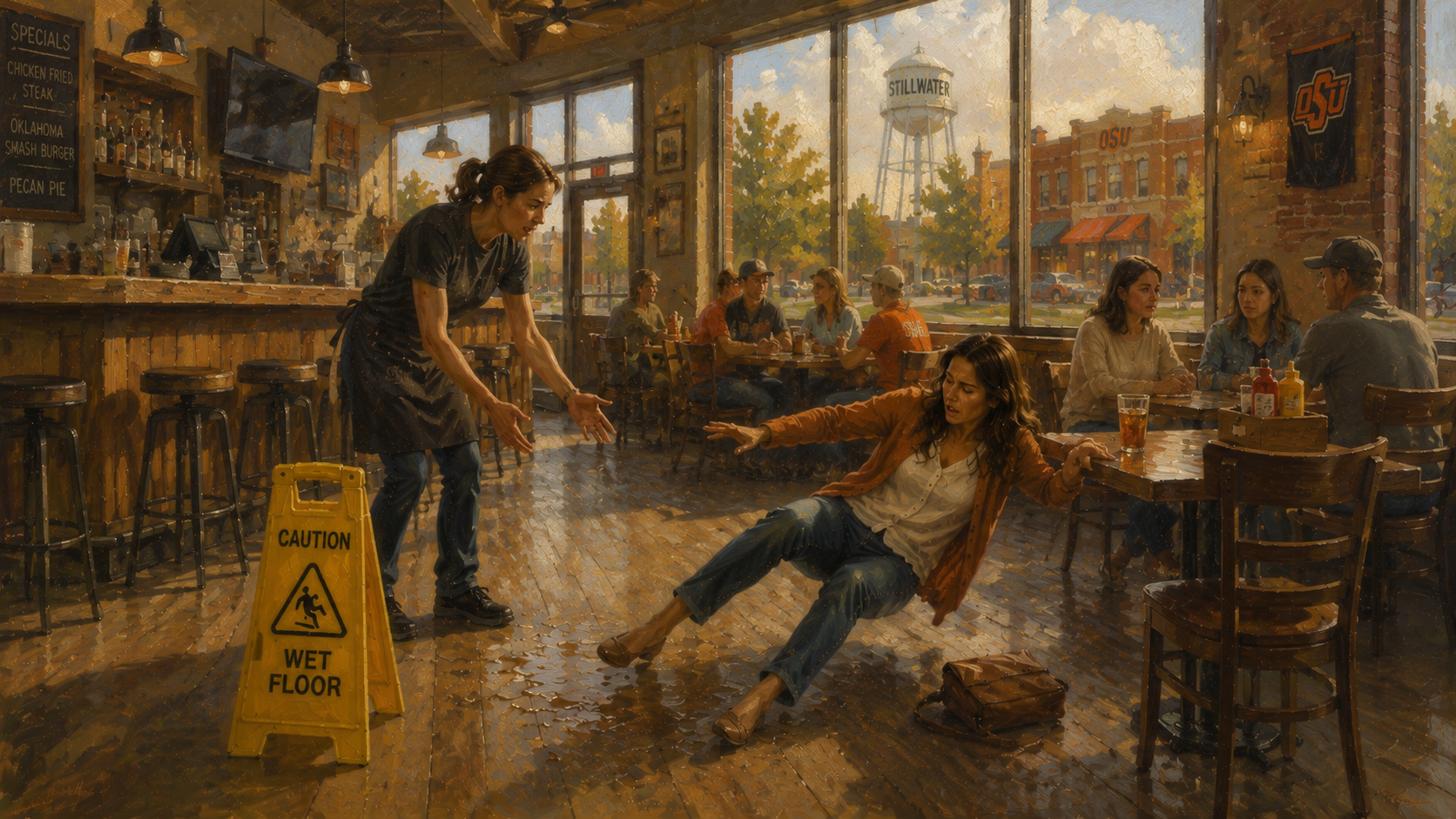
- Freshly mopped floors without adequate wet floor signage during late-night cleaning operations when customers are still present
- Parking lot and exterior walkway hazards that receive less attention during busy operating periods
- Worn or damaged flooring that develops in high-traffic areas near entrances, bars, and popular seating sections
The combination of high volume, extended hours, and a customer base that includes a significant proportion of late-night diners creates a slip and fall risk profile that is higher than a typical neighborhood restaurant — and the legal duty of care the restaurant owes its customers is correspondingly significant.
Who May Be Liable for Your Injuries
One of the more nuanced aspects of restaurant slip and fall cases near OSU is that the party legally responsible for your injuries is not always obvious from the name on the front door. Depending on the ownership structure of the restaurant and property, liability may rest with:
- The restaurant operator — if the fall resulted from a condition within the dining room, restrooms, bar area, or kitchen-adjacent spaces that the business controls and manages. This is the most common scenario and typically the primary source of liability in a restaurant fall.
- The property owner — if the restaurant operates as a tenant in a building or commercial space owned by a separate landlord, and the hazardous condition existed in a common area, exterior walkway, parking lot, or structural element that the landlord is responsible for maintaining.
- A third-party cleaning or maintenance contractor — if the restaurant outsources janitorial services and the fall resulted from an improperly executed cleaning operation — a wet floor left without signage after mopping, for example — the contractor may share liability alongside the restaurant operator.
- A combination of parties — in cases involving shared spaces, landlord-tenant arrangements, or contractor involvement, more than one party may bear partial responsibility for the conditions that led to your fall.
Identifying all liable parties matters not just for legal completeness but because it directly affects the total compensation available to you and the insurance resources that can be accessed to fund your recovery.
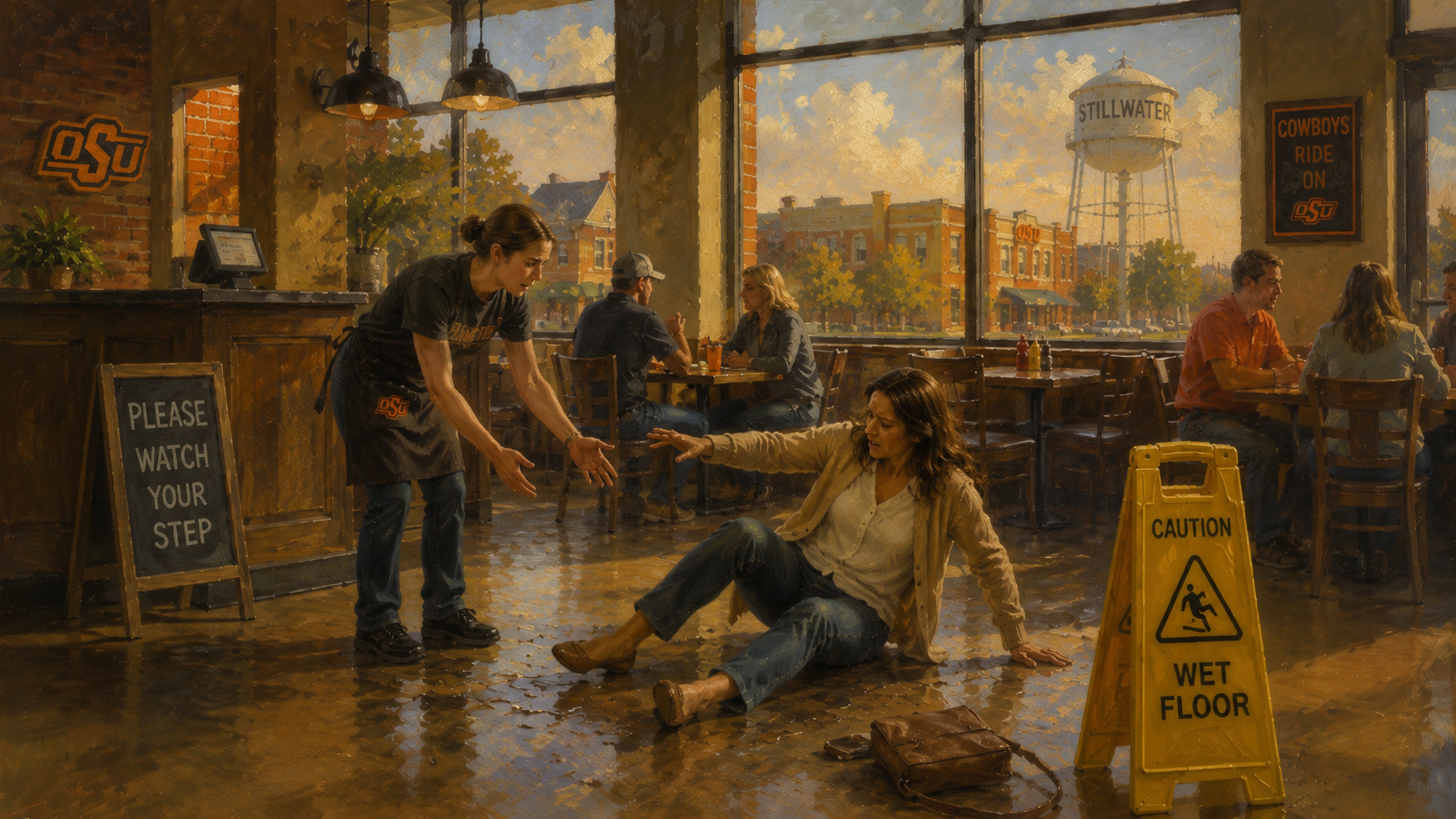
What the Restaurant Owed You Under Oklahoma Law
Under Oklahoma premises liability law, every restaurant owes its customers a duty to maintain the premises in a reasonably safe condition. That duty does not diminish during a busy service period, a staffing shortage, or a high-volume game day weekend — it applies continuously and requires active management of conditions throughout every hour the restaurant is open.
The core obligations include regularly inspecting the premises for hazardous conditions, correcting known hazards within a reasonable timeframe, and providing adequate warning to customers about dangers that cannot be immediately resolved. When a Stillwater restaurant near OSU falls short of any of these obligations and a customer is injured as a result, the business may be held legally liable.
Why Surveillance Footage Is Critical — and Why It Disappears Fast
Most restaurants in the OSU area maintain camera systems covering their dining rooms, entryways, and sometimes outdoor seating or parking areas. That footage can answer the questions that determine the outcome of your case — how long a hazard existed before you fell, whether any staff members walked past it without acting, and what conditions were present at the exact moment of your accident.
But restaurant surveillance footage operates on rolling overwrite cycles. In many establishments that cycle is as short as 24 to 72 hours. Once the footage is gone, reconstructing the timeline of events becomes significantly harder — and the restaurant’s account of what happened becomes more difficult to challenge.
An attorney who acts quickly can send a formal legal preservation request that compels the restaurant to retain the footage before it is overwritten. That request needs to go out within days of the accident — not weeks.
Steps to Take After a Stillwater Restaurant Fall
What you do in the immediate aftermath of a slip and fall at a Stillwater restaurant near OSU directly affects the strength of your claim. If you are physically able, take the following steps before leaving:
- Report the incident to the manager on duty and ask that an official incident report be completed — request a written copy before you leave
- Photograph the hazard that caused your fall, the surrounding area, any wet floor signs that were or were not present, and your visible injuries
- Note the names of employees who responded to the scene and the approximate time the accident occurred
- Collect contact information from other diners or witnesses who observed the fall
- Preserve the footwear you were wearing at the time — it may be relevant evidence
- Seek medical attention the same day, even if injuries feel manageable
- Do not give a recorded statement to the restaurant’s insurance company or sign any documents before speaking with a personal injury attorney
Injuries Common in Stillwater Restaurant Slip and Fall Cases
Hard tile and polished concrete flooring standard in restaurant environments provides little cushion when a customer falls unexpectedly. Injuries seen in Stillwater restaurant slip and fall cases include:
- Hip fractures requiring surgery and extended rehabilitation
- Broken wrists or arms from bracing a fall
- Knee injuries including torn meniscus or ligament damage
- Traumatic brain injuries or concussions from striking the floor or nearby furniture
- Cervical and lumbar spine injuries producing chronic pain long after the initial accident
- Shoulder injuries from the mechanics of an unexpected fall
Many of these injuries require not just emergency care but months of follow-up treatment — physical therapy, specialist visits, and time away from work or class — costs that accumulate significantly beyond what an initial insurance offer typically accounts for.
Talk to a Stillwater Slip and Fall Lawyer
Restaurants near OSU and their insurance carriers are not passive participants when a customer is injured on their premises. These claims are actively managed from the moment an incident report is filed, and the goal is to minimize liability — not to ensure you are fairly compensated.
Having an experienced premises liability attorney representing you early in the process changes that dynamic entirely — ensuring critical evidence is preserved, your medical treatment is properly documented, and your claim reflects the true cost of what happened.
To learn more about how we help slip and fall victims across Stillwater and Payne County, visit our Stillwater personal injury page.
If you’re ready to talk about what happened, request a free case review or call (405) 447-HURT today.