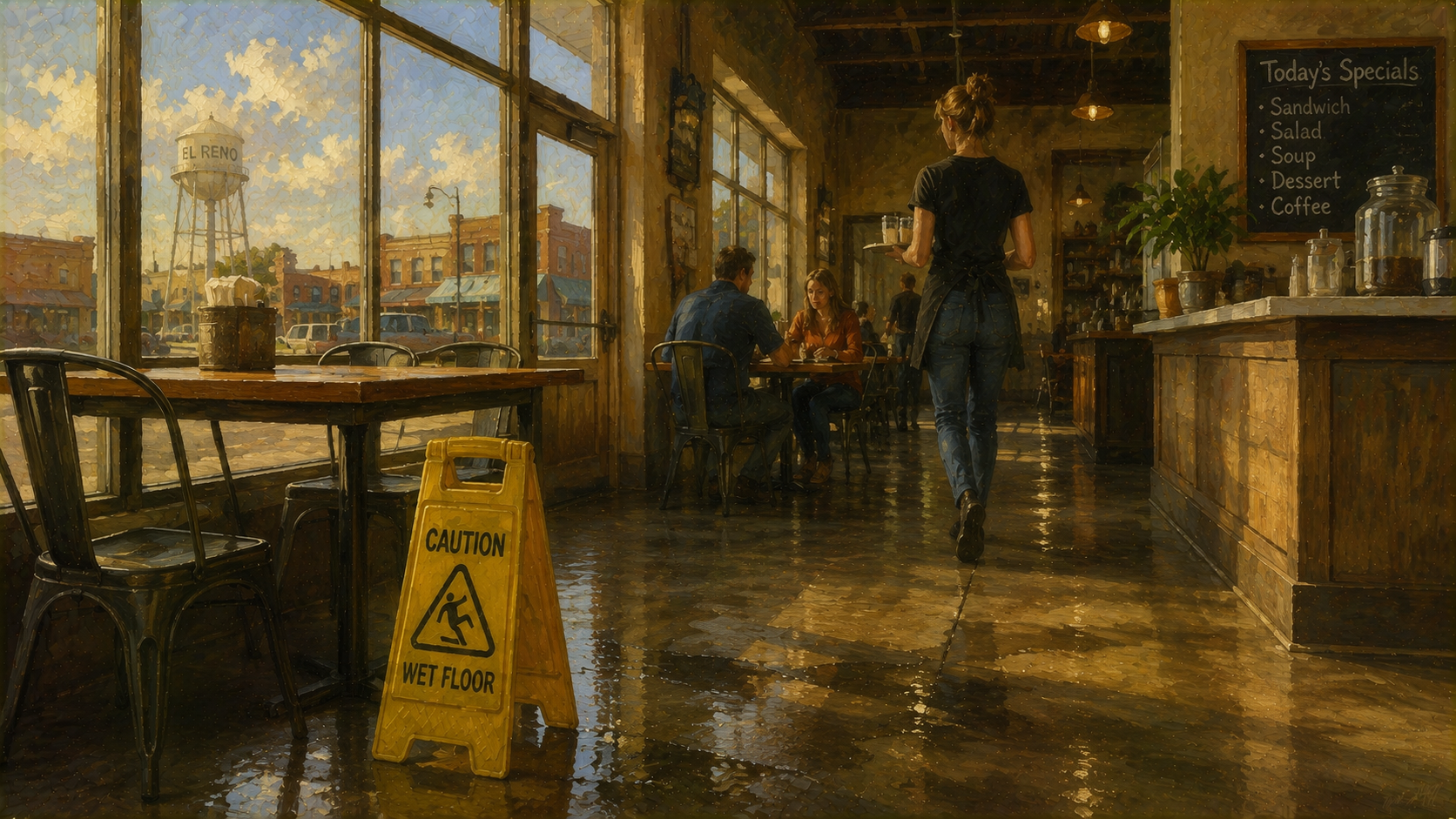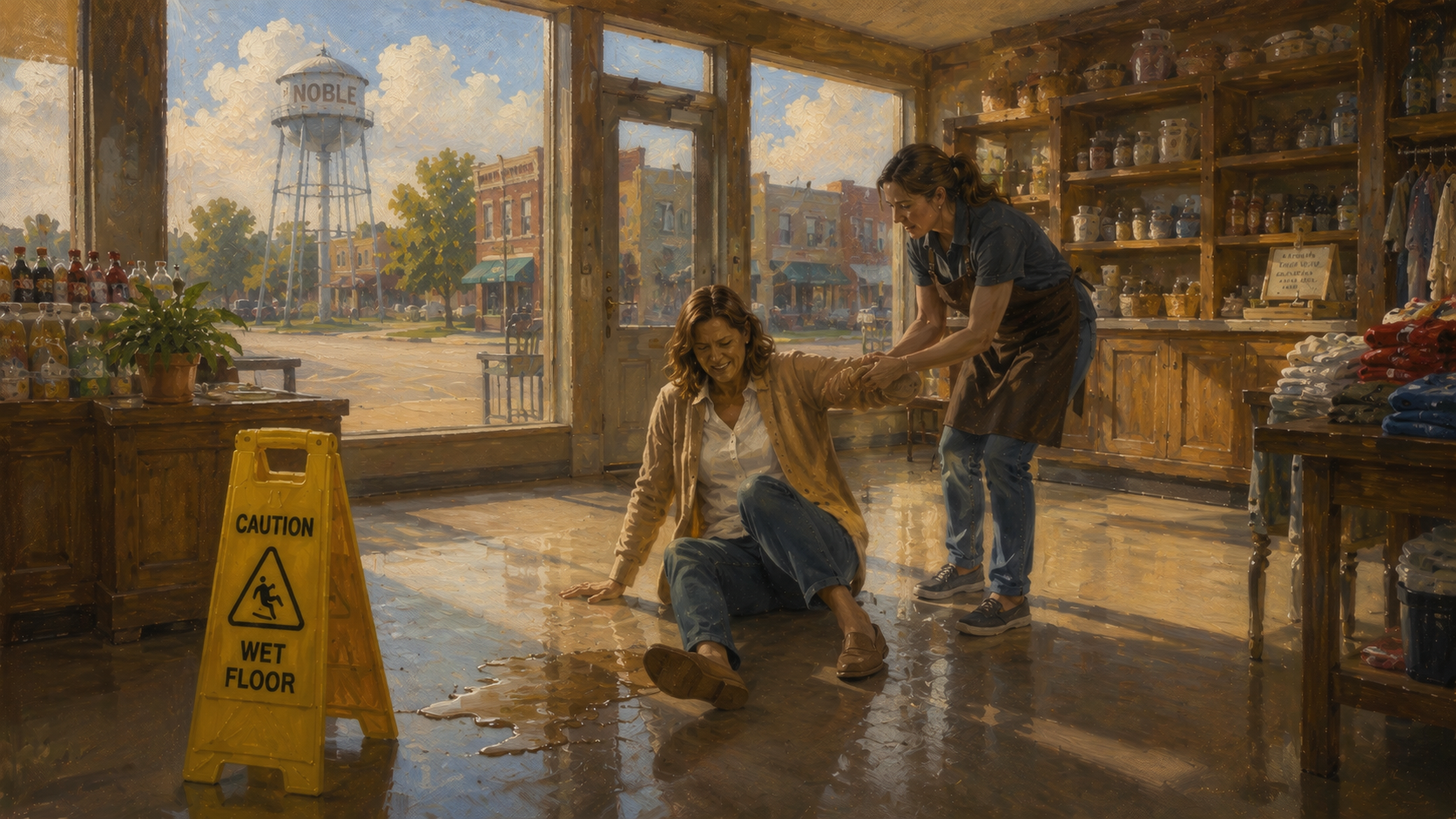
Noble is a growing community in Cleveland County, and its commercial landscape reflects that growth — retail stores, restaurants, service businesses, and neighborhood establishments that residents rely on daily line the corridors along Highway 77 and the surrounding streets. When any of those businesses fails to maintain safe conditions for the customers who walk through their doors, Oklahoma premises liability law holds them accountable.
If you were injured in a slip and fall at a Noble business, here is what property owners are legally required to provide — and what your options are when they fall short.
What Oklahoma Law Requires of Business Property Owners
The legal foundation of a slip and fall claim in Noble is premises liability — the area of Oklahoma law that establishes what duty a property owner or business operator owes to the people who visit their property. For any business open to the public, that duty is clear and well-established.
Business owners and property managers in Noble are legally required to:
- Maintain the premises in a reasonably safe condition — this is an active, ongoing obligation, not a one-time standard met at opening. Conditions change throughout the day, and the duty to keep the property safe changes with them.
- Conduct regular inspections — a business cannot simply wait for someone to report a hazard. Reasonable inspection practices require actively looking for dangerous conditions before customers encounter them.
- Correct known hazards promptly — when a hazardous condition is identified, it must be addressed within a reasonable timeframe. Leaving a known danger in place while customers continue to move through the space is a failure of the legal duty of care.
- Warn customers about dangers that cannot be immediately corrected — when a hazard exists that cannot be fixed right away, the business must provide clear, adequate warning visible to approaching customers so they can avoid it.
When a Noble business fails to meet any of these obligations and a customer is injured as a result, the business — and in some cases the property owner if the operator is a tenant — may be held legally liable for the damages that follow.
Common Causes of Slip and Fall Accidents at Noble Businesses
Noble’s commercial activity is concentrated primarily along the Highway 77 corridor and the streets connecting to it, where a variety of retail, food service, and neighborhood businesses operate. Common causes of slip and fall accidents at these locations include:
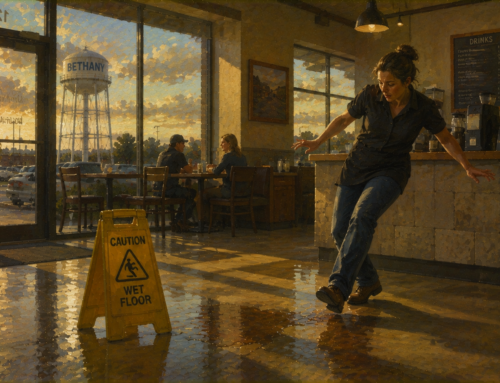
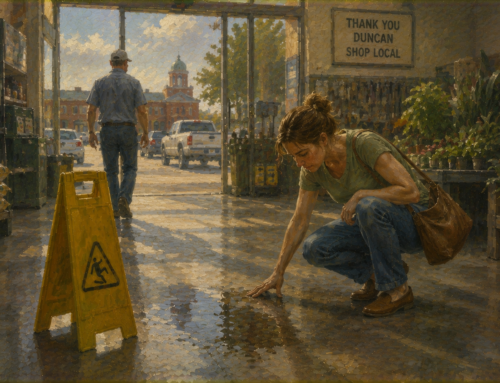
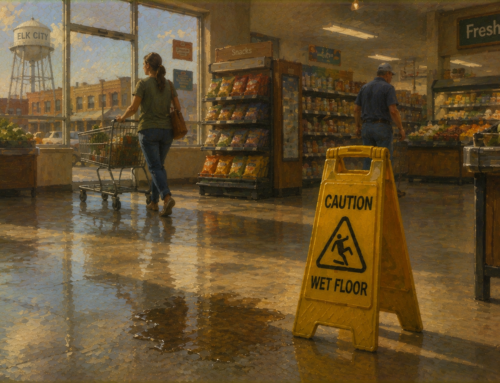
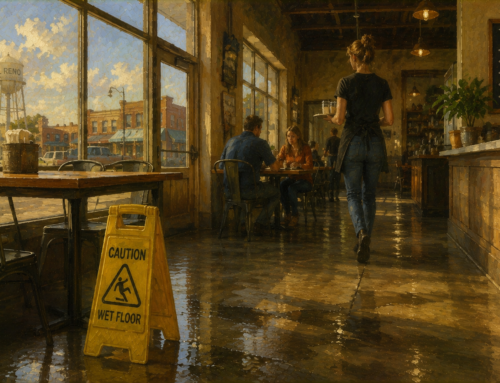
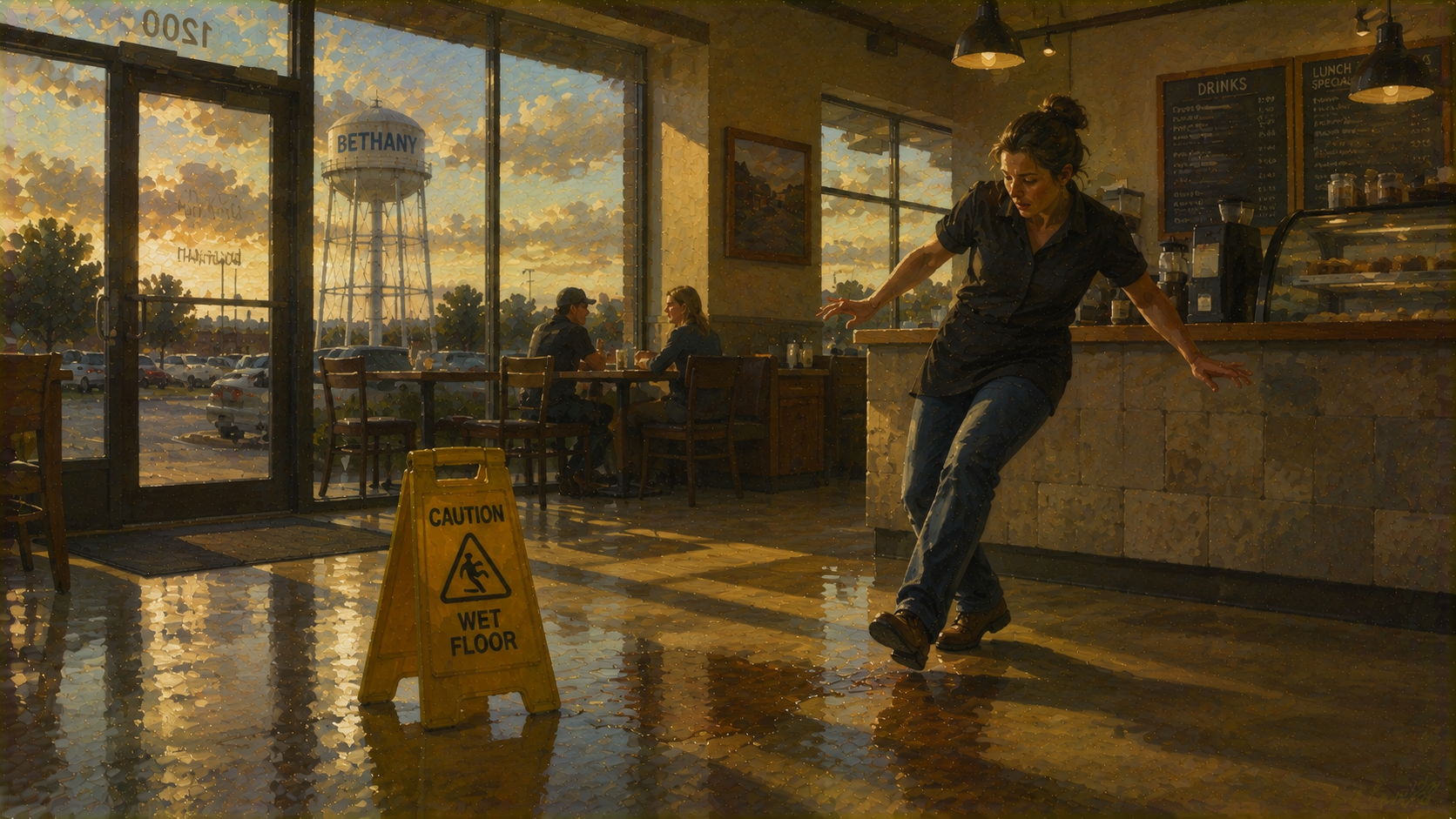
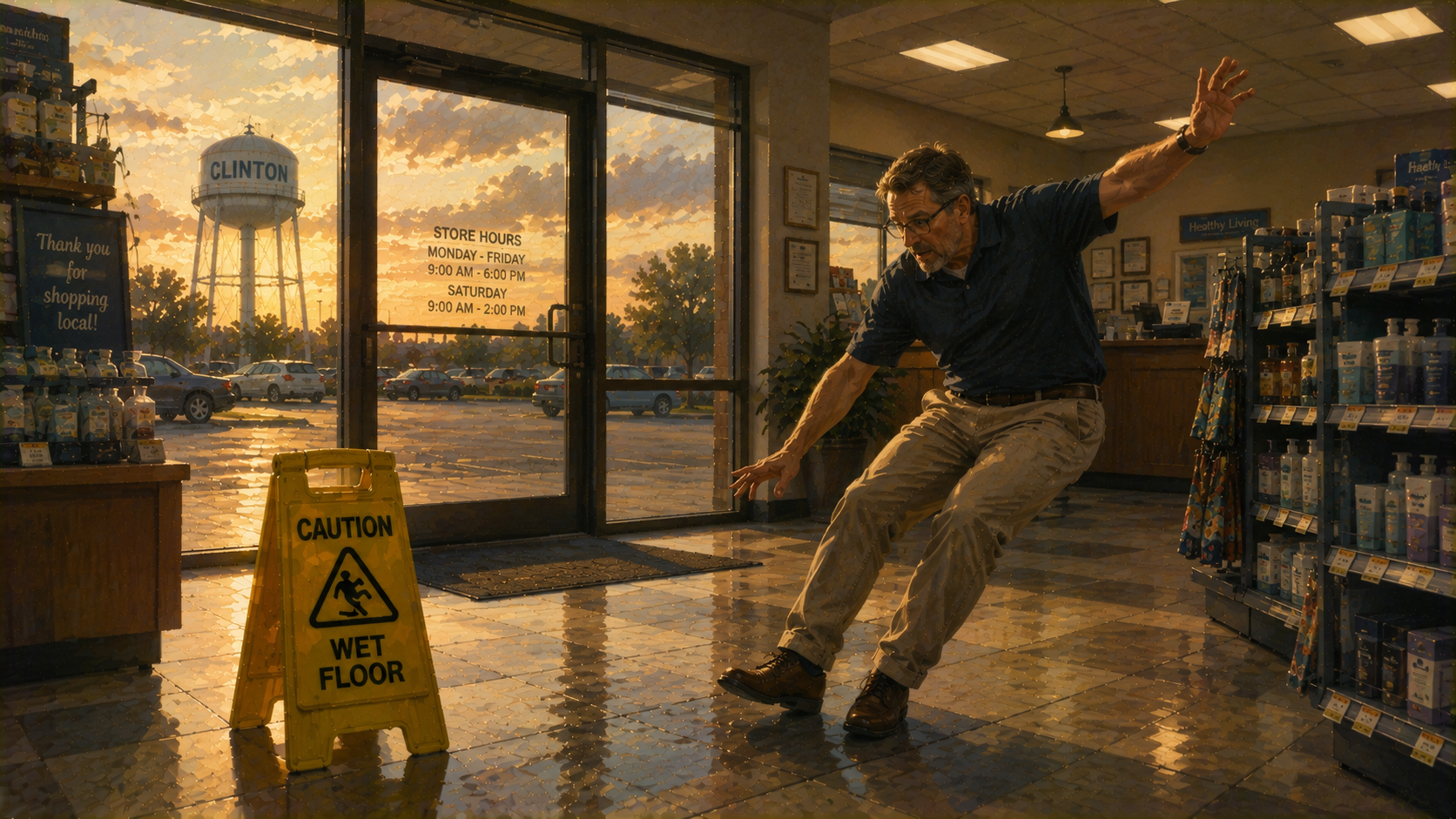
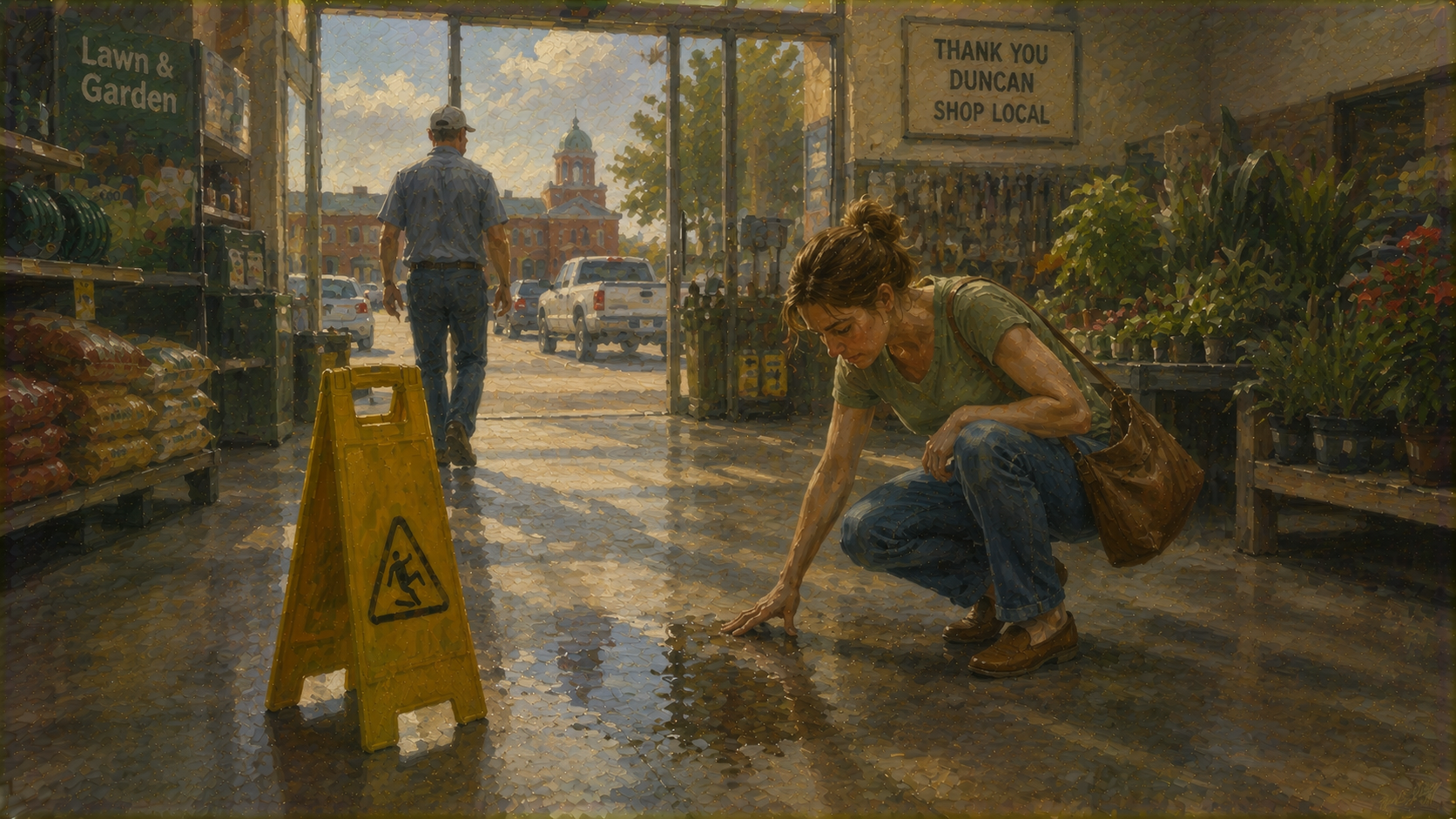
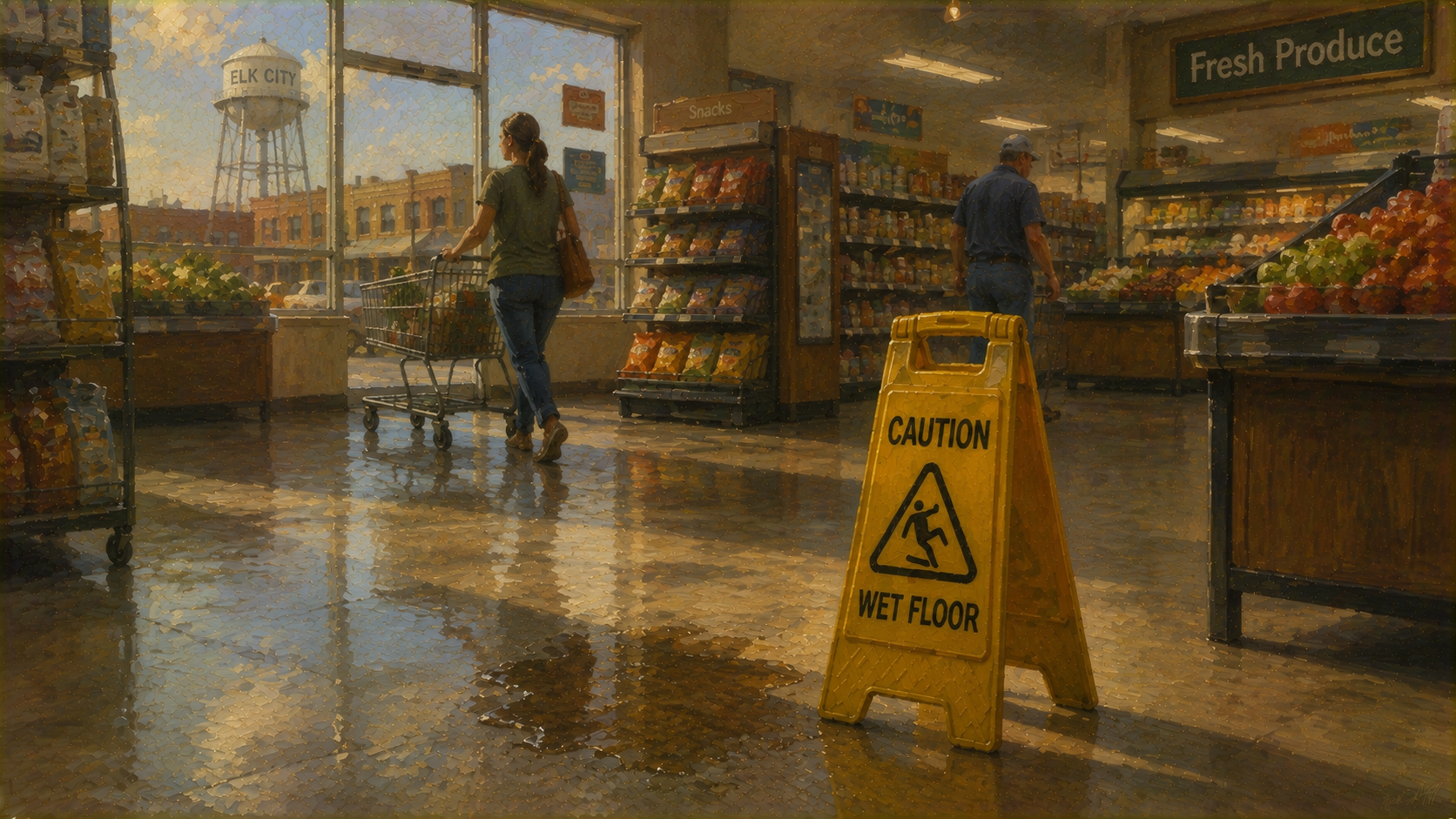
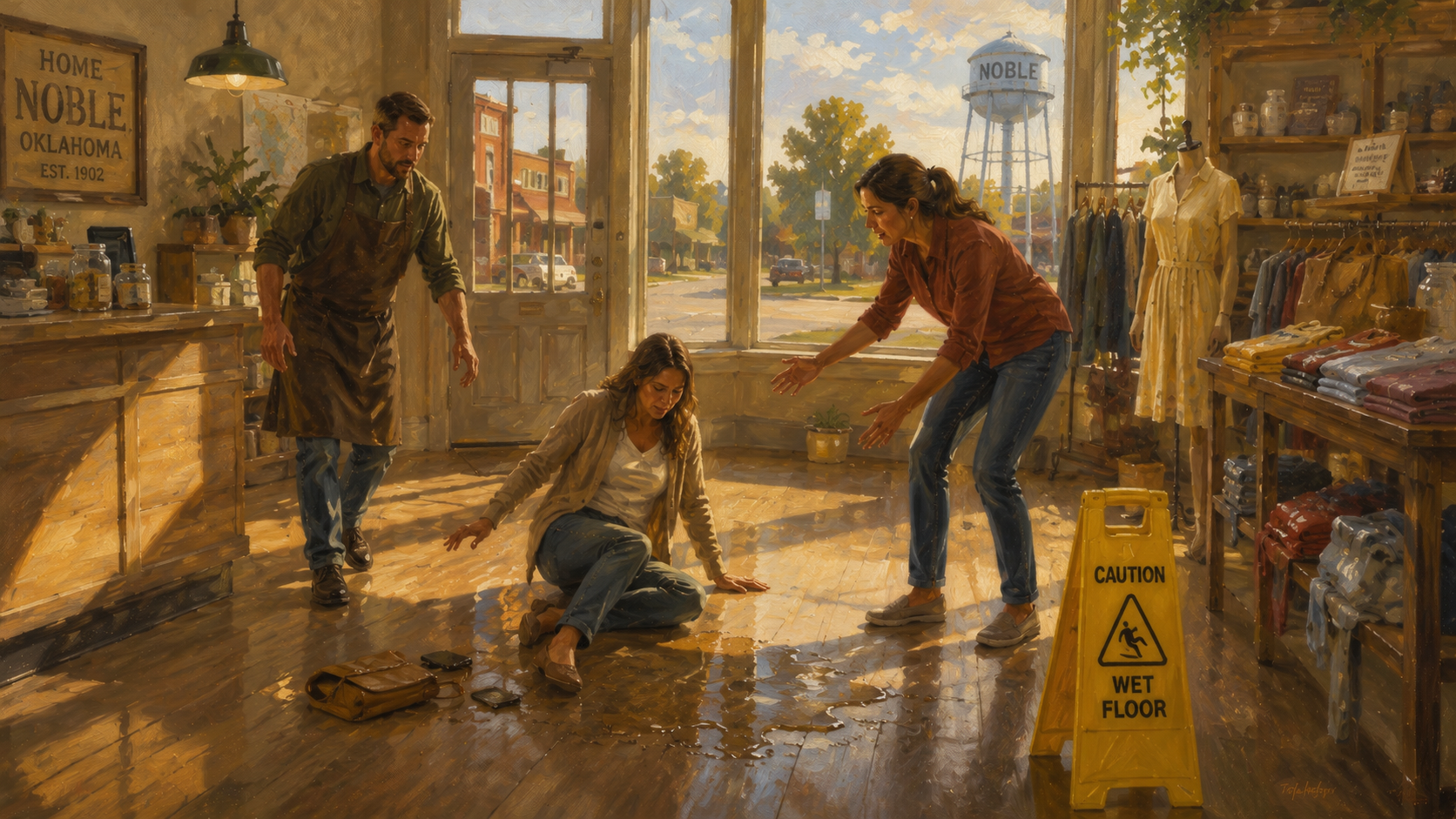
- Wet floors from spills, mopping operations, or leaking equipment without adequate signage or barriers
- Damaged, curled, or missing entrance mats near doorways — particularly during Oklahoma’s rainy and icy seasons
- Uneven pavement, cracked sidewalks, or deteriorating asphalt in parking lots and exterior walkways
- Poor lighting in store interiors, restrooms, or parking areas that reduces a customer’s ability to see floor hazards
- Cluttered or obstructed walkways created by merchandise, displays, or equipment left in customer traffic areas
- Liquid or food spills in restaurant or grocery environments that are not addressed within a reasonable time
- Ice or standing water near building entrances during winter weather that is not treated or adequately warned against
- Defective flooring, loose tiles, or uneven transitions between floor surfaces inside the business
Each of these conditions represents a foreseeable risk — the kind of hazard that a reasonably managed business should identify and address before a customer is hurt.
The Notice Question — What the Business Knew and When
Establishing that a hazardous condition existed is not always enough to win a premises liability case. The law also requires showing that the property owner or business knew about the condition — or should have known about it through reasonable inspection — before the accident occurred.
This notice question is often where these cases are won or lost. Evidence that can establish notice in a Noble business slip and fall case includes:
- Surveillance footage showing how long the hazard was present before the fall
- Maintenance and inspection logs revealing whether the area was recently checked or whether prior concerns were documented
- Employee statements about awareness of the condition before the accident
- Prior complaints or incident reports involving the same location or type of hazard
- The physical characteristics of the hazard itself — a spill that has dried and become sticky, a mat that has been visibly worn for weeks, or a light fixture that has been out for an extended period all suggest the condition existed long enough that reasonable inspection should have caught it
What to Do After a Slip and Fall at a Noble Business
The steps you take immediately after a slip and fall at a Noble business have a direct impact on your ability to build a strong claim. If you are physically able, take the following steps:
- Report the incident to the business owner or manager on duty before leaving and ask that an official incident report be completed — request a written copy
- Photograph the hazard that caused your fall, the surrounding area, any signage that was or was not present, and your visible injuries
- Note the names of any employees who responded to the scene and the exact time the accident occurred
- Collect contact information from any other customers or bystanders who witnessed the fall
- Preserve the footwear you were wearing — it may become relevant evidence
- Seek medical attention the same day, even if your injuries feel manageable in the moment
- Do not give a recorded statement to the business’s insurance company or sign any documents before speaking with a personal injury attorney
Surveillance footage from inside the business is often the most valuable evidence in a slip and fall case. Most businesses retain footage on a rolling overwrite cycle — sometimes as short as 48 to 72 hours. Acting quickly to formally request preservation of that footage is one of the most time-sensitive steps in the entire process.
Injuries Commonly Seen in Business Slip and Fall Cases
Hard flooring surfaces — tile, concrete, and polished stone common in commercial environments — offer little cushion when a customer falls unexpectedly. Injuries in Noble business slip and fall cases frequently include:
- Hip fractures requiring surgery and extended rehabilitation, particularly serious for older adults
- Broken wrists or arms from instinctively bracing a fall
- Knee injuries including torn ligaments or meniscus damage
- Traumatic brain injuries or concussions from striking the floor or nearby fixtures
- Cervical and lumbar spine injuries producing chronic pain or limited mobility long after the initial accident
- Shoulder injuries from the rotational force of an unexpected fall
Many of these injuries require not just emergency treatment but months of ongoing care — physical therapy, specialist consultations, follow-up imaging, and time away from work — costs that accumulate far beyond what an initial insurance offer typically reflects.
Talk to a Noble Slip and Fall Lawyer
When a Noble business fails to maintain safe conditions and you are injured as a result, the property owner’s insurance carrier will not make recovering fair compensation easy. These claims involve pushback, disputes over notice, and early offers designed to close cases before the full extent of injuries is known.
Having an experienced premises liability attorney in your corner from the beginning changes that dynamic — ensuring evidence is preserved, your medical treatment is properly documented, and the full value of your claim is pursued.
To learn more about how we help slip and fall victims across Noble and Cleveland County, visit our Noble Slip and Fall personal injury page.
If you’re ready to talk about what happened, request a free case review or call (405) 447-HURT today.