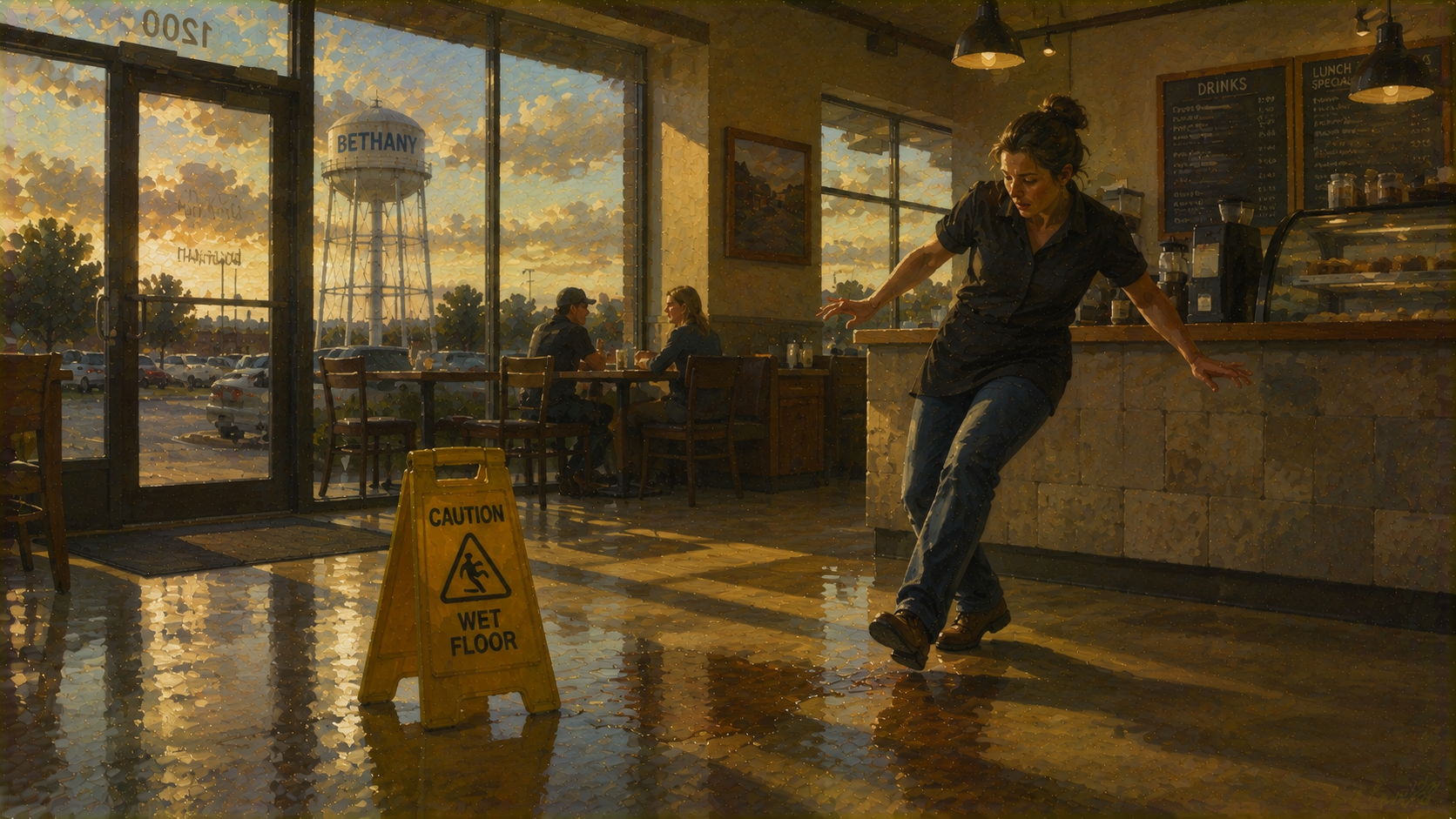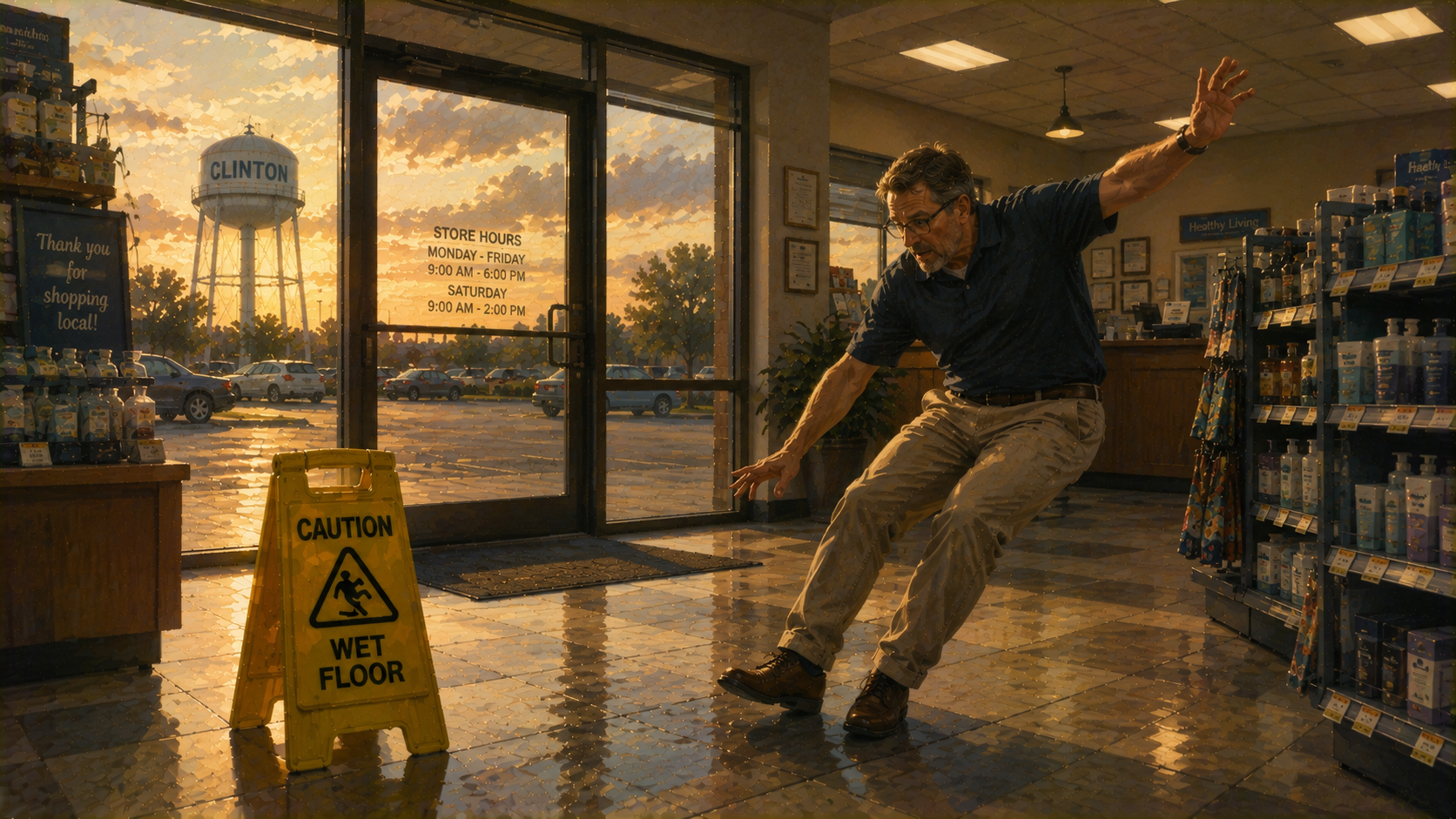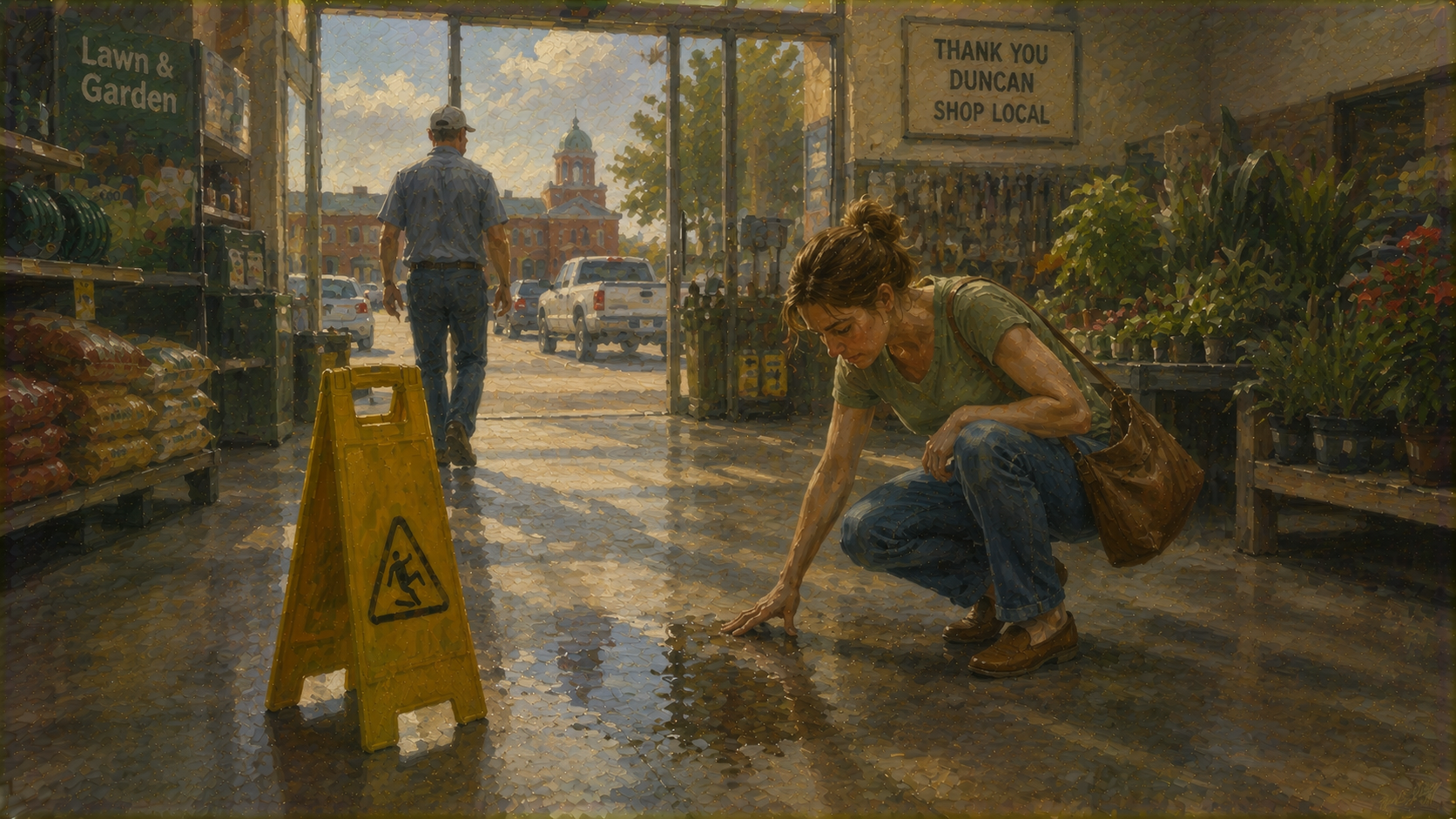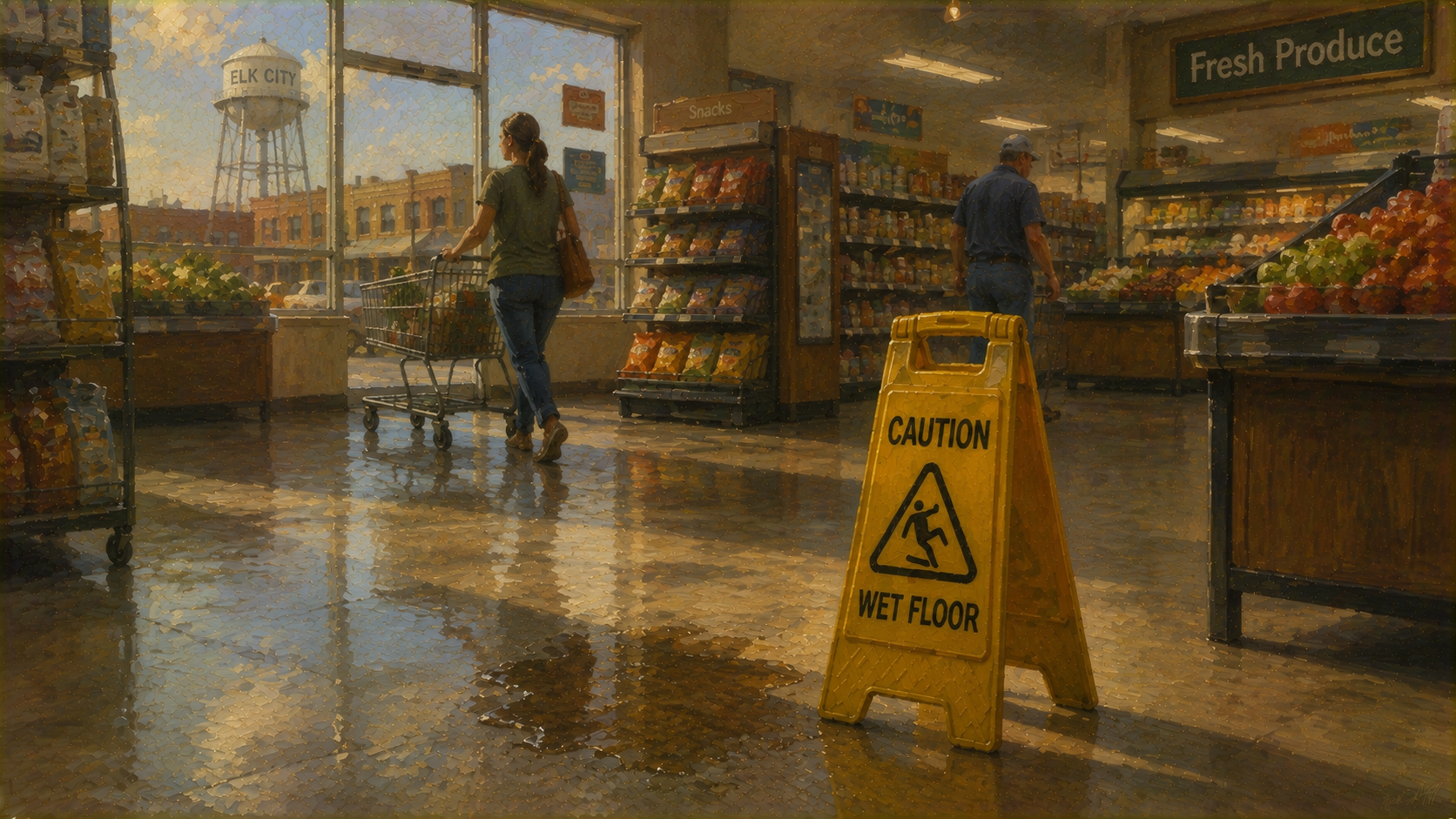
Shawnee’s grocery and retail corridors along Harrison Street, Kickapoo Street, and the commercial areas surrounding Shawnee Mall serve tens of thousands of Pottawatomie County residents every day. Grocery stores in particular see a consistent and heavy volume of foot traffic — and with that volume comes a predictable and ongoing risk of slip and fall accidents caused by wet floors, leaking refrigeration units, cluttered aisles, and poorly maintained entryways.
When a Shawnee grocery store fails to manage those hazards and a customer is hurt, Oklahoma premises liability law may hold the business legally responsible for what follows.
Why Grocery Stores in Shawnee Are High-Risk Environments
The nature of grocery store operations makes them one of the most common settings for slip and fall injuries anywhere in Oklahoma — and Shawnee is no exception. High foot traffic combined with a food and beverage environment that constantly generates wet and slippery conditions creates a hazard profile that well-managed stores work actively to control. When that active management lapses, customers pay the price.
Common causes of slip and fall accidents in Shawnee grocery stores include:
- Condensation and leaks from refrigerated display cases in dairy, produce, and frozen food aisles
- Spilled beverages, juice, or liquid from damaged or leaking product packaging left unaddressed during busy shopping periods
- Water tracked in from outside during Oklahoma’s rain and ice seasons accumulating near entryways and checkout areas
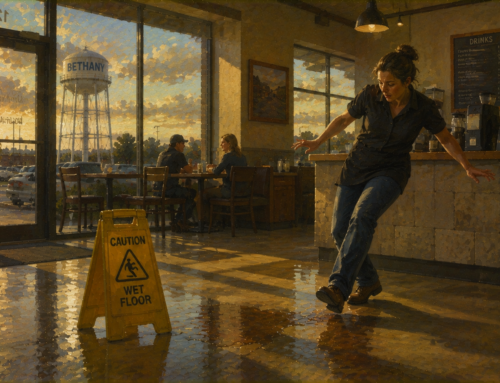
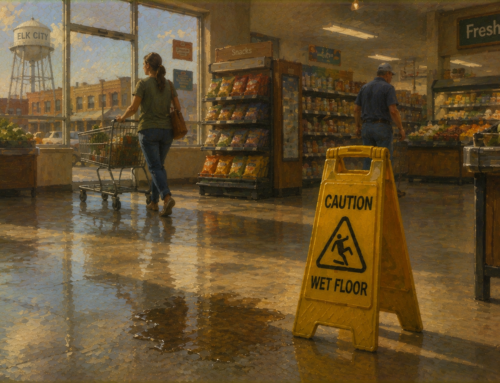
- Freshly mopped floors without visible or adequate wet floor warnings placed where approaching customers can see them
- Produce misting systems that create overspray onto adjacent floor surfaces in produce sections
- Torn, curled, or missing entrance mats during wet weather that leave slippery bare flooring at store entries
- Slow staff response to reported spills in high-traffic checkout lanes and drink station areas
- Damaged, uneven, or deteriorating flooring near high-volume areas that develops over time without repair
These hazards are not unusual or unforeseeable — they are a routine and predictable part of grocery store operations. Oklahoma law holds property owners and store managers to a standard of reasonable care precisely because these conditions are foreseeable and within the store’s control to prevent.
What Oklahoma Premises Liability Law Requires
Under Oklahoma premises liability law, every grocery store owes a clear and ongoing legal duty to every customer who enters. That duty requires the store to maintain the premises in a reasonably safe condition — actively, not passively. It does not pause during a busy Saturday afternoon, a short-staffed morning shift, or a holiday rush. It applies continuously, and the failure to meet it during the moments when it is hardest to maintain does not shield the business from legal responsibility when a customer is hurt.
The central legal question in most Shawnee grocery store slip and fall cases is not simply whether a hazard existed — it is whether the store knew about it, or should have known about it through reasonable inspection, before the accident occurred. This typically comes down to one of two scenarios:
- The store created the hazard — a mop crew left a floor wet without posting adequate warnings, a refrigeration unit with a documented leak was left unaddressed, or a mat was removed and not replaced during wet weather
- The store failed to discover the hazard in time — a spill occurred and staff did not identify or respond to it within a reasonable period given the store’s own inspection practices and staffing levels
Either way, when a store falls short of its legal obligation and a customer is injured as a result, the business may be held liable for the full scope of the victim’s damages.
Why Surveillance Footage Is So Important — and So Time-Sensitive
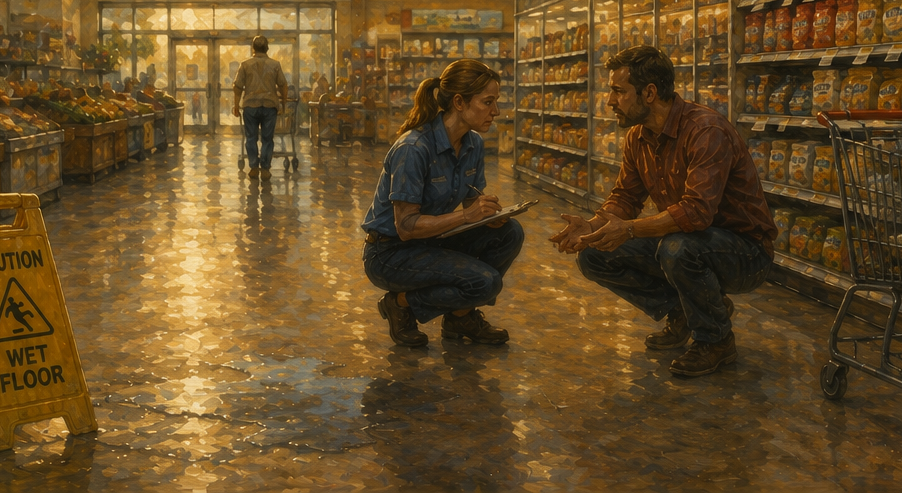
Most Shawnee grocery stores maintain camera systems covering their aisles, checkout areas, entryways, and parking lots. That footage can answer the questions that most directly determine the outcome of a slip and fall case — how long a hazard existed before someone fell, whether any employees walked past it without responding, and what conditions were present at the exact moment of the accident.
It can also be gone within 24 to 72 hours. Most grocery store surveillance systems operate on rolling overwrite cycles, and once that footage is overwritten it cannot be recovered. An attorney who acts immediately after a grocery store fall can send a formal legal preservation request that compels the store to retain the footage before it disappears. That letter needs to go out within days — not weeks — of the accident.
Common Injuries in Shawnee Grocery Store Slip and Fall Cases
Hard tile and polished concrete flooring standard in grocery store environments offers little cushion when a customer falls unexpectedly. Injuries seen in grocery store slip and fall cases in Shawnee frequently include:
- Hip fractures requiring surgery and extended rehabilitation — particularly serious and life-altering for older adults
- Broken wrists or arms sustained while instinctively trying to catch a fall
- Knee injuries including torn meniscus or ligament damage requiring surgical repair
- Traumatic brain injuries or concussions from striking the floor or nearby shelving or display cases
- Cervical and lumbar spine injuries producing chronic pain or limited mobility long after the initial accident
- Shoulder injuries from the rotational mechanics of an unexpected fall on a hard surface
Many of these injuries require not just emergency care but months of follow-up treatment — physical therapy, specialist visits, imaging studies, and time away from work — costs that accumulate quickly and frequently far exceed what an initial insurance offer reflects.
Steps to Take After a Slip and Fall at a Shawnee Grocery Store
What you do in the immediate aftermath of a grocery store fall can have a direct and lasting impact on the strength of your claim. If you are physically able, take the following steps before leaving the store:
- Report the incident to the store manager before leaving and ask that an official incident report be completed — request a written copy for your records before you leave
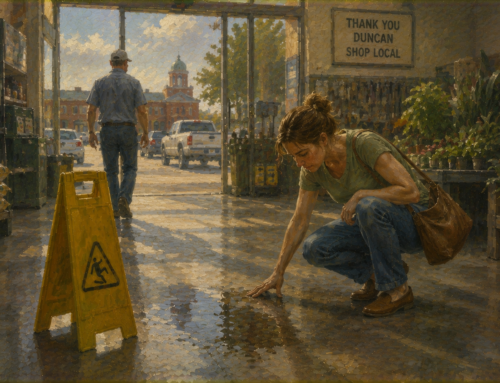
- Photograph the hazard that caused your fall, the surrounding area, any wet floor signs that were or were not in place, and your visible injuries
- Take photos of the footwear you were wearing at the time of the fall
- Collect the names and contact information of any other customers who witnessed the accident
- Note the time of the fall and the names of any store employees who responded
- Seek medical attention the same day, even if injuries feel manageable in the moment
- Do not give a recorded statement to the store’s insurance company or sign any documents before speaking with a personal injury attorney
Talk to a Shawnee Slip and Fall Lawyer
Grocery stores and their insurance carriers are experienced at managing these claims — and their approach from the moment an incident report is filed is to minimize what they pay out. Having an experienced premises liability attorney representing you early ensures that critical evidence is preserved, your medical care is properly documented, and your claim reflects the true cost of your injuries rather than the number the store’s insurer would prefer to settle for.
To learn more about how we help slip and fall victims across Shawnee and Pottawatomie County, visit our Shawnee personal injury page.
If you’re ready to talk about what happened, request a free case review or call (405) 447-HURT today.