Slip and Fall at a Chickasha Restaurant — Steps to Protect Your Claim
Chickasha’s restaurant scene runs along the corridors of Highway 81, Grand Avenue, and the surrounding commercial streets that serve Grady County residents, travelers passing through on US-81, and the communities connecting to Chickasha from across the region. Busy service periods, active kitchens, and constant customer turnover create exactly the conditions where floor hazards develop quickly — and when a Chickasha restaurant fails to stay ahead of those hazards, customers get hurt.
If you were injured in a slip and fall at a Chickasha restaurant, the steps you take in the hours and days that follow will directly affect the strength of your claim and what you are ultimately able to recover.
Why Restaurants in Chickasha Create Elevated Slip and Fall Risk
Restaurants are among the most common settings for slip and fall injuries in Oklahoma — and the conditions that make them dangerous are built into the nature of restaurant operations themselves. Unlike a retail store, where floor hazards are relatively infrequent, a restaurant generates wet, slippery, and cluttered conditions continuously throughout every service period from multiple sources simultaneously.
Common causes of slip and fall accidents in Chickasha restaurants include:
- Spilled food and beverages on dining room floors that go unaddressed during busy lunch and dinner service periods when staff are stretched thin
- Grease or cooking residue tracked from kitchen areas into dining rooms, service corridors, and restrooms
- Wet floors near drink stations, ice machines, wait stations, and soda dispensers
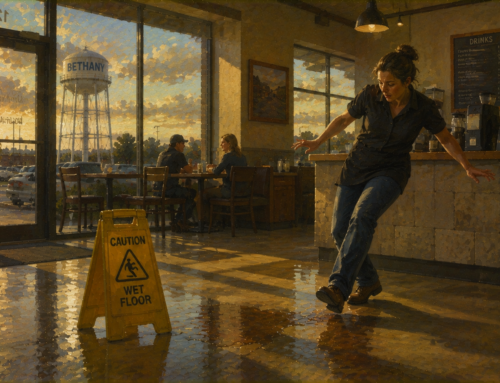
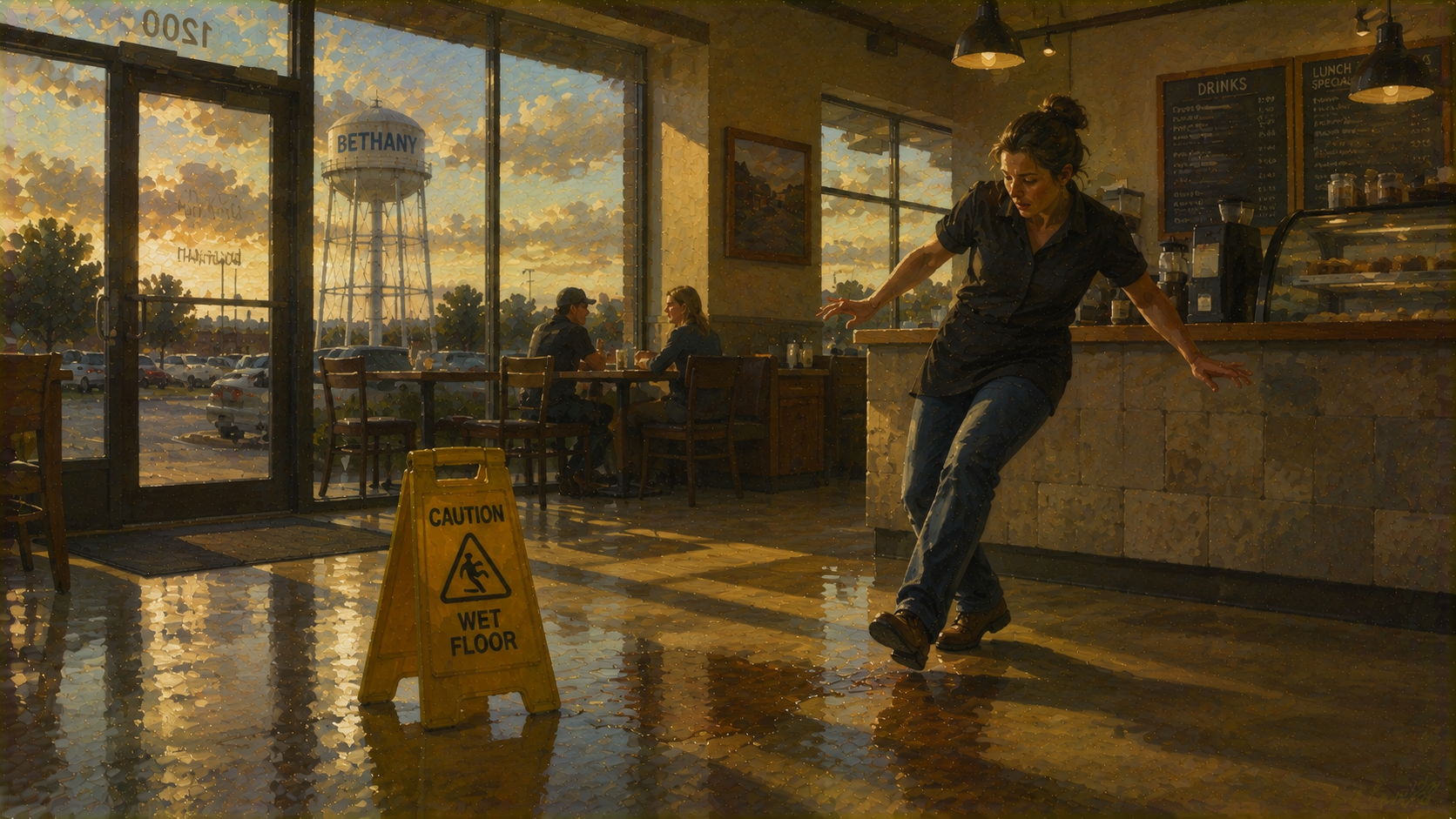
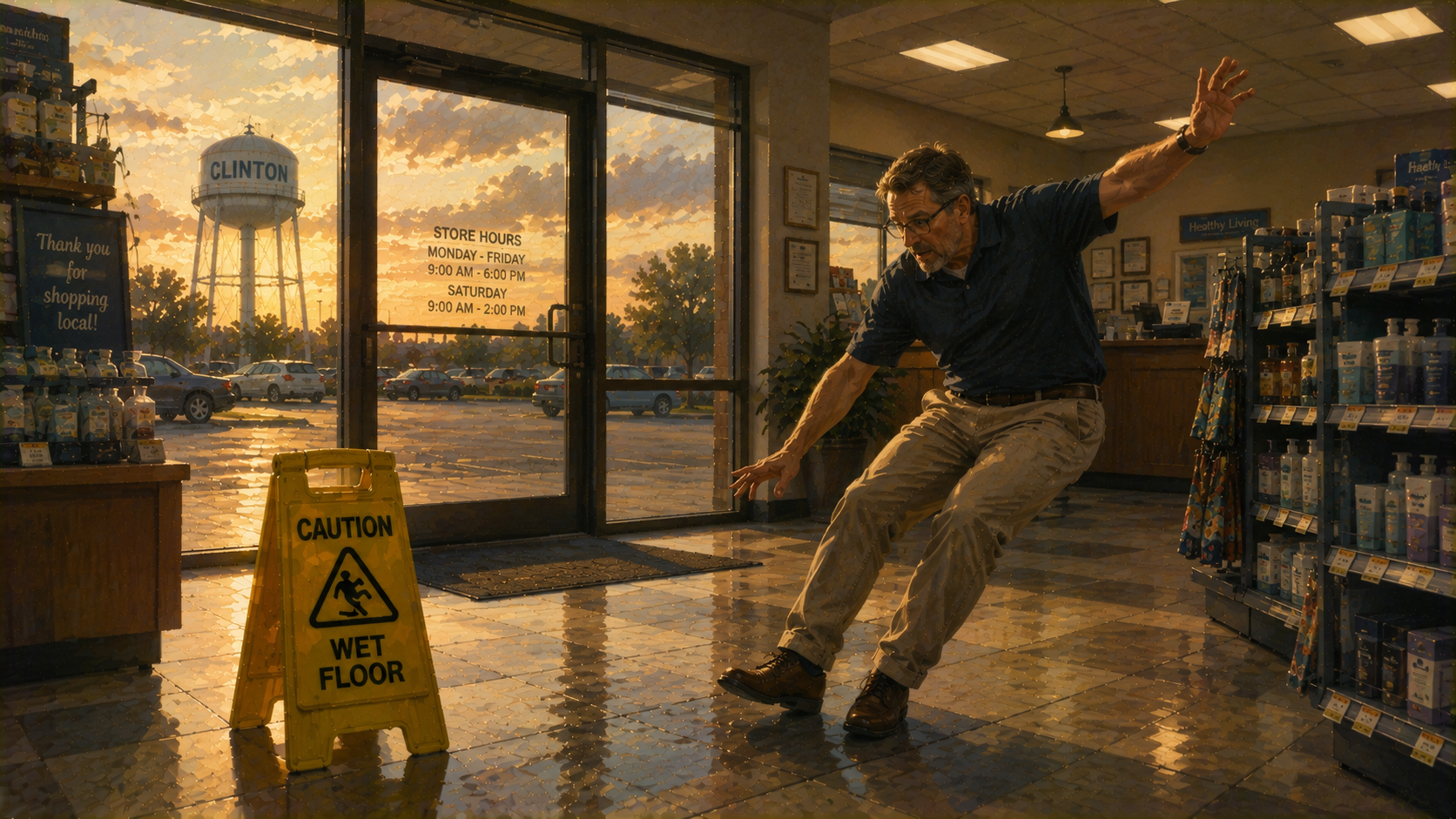
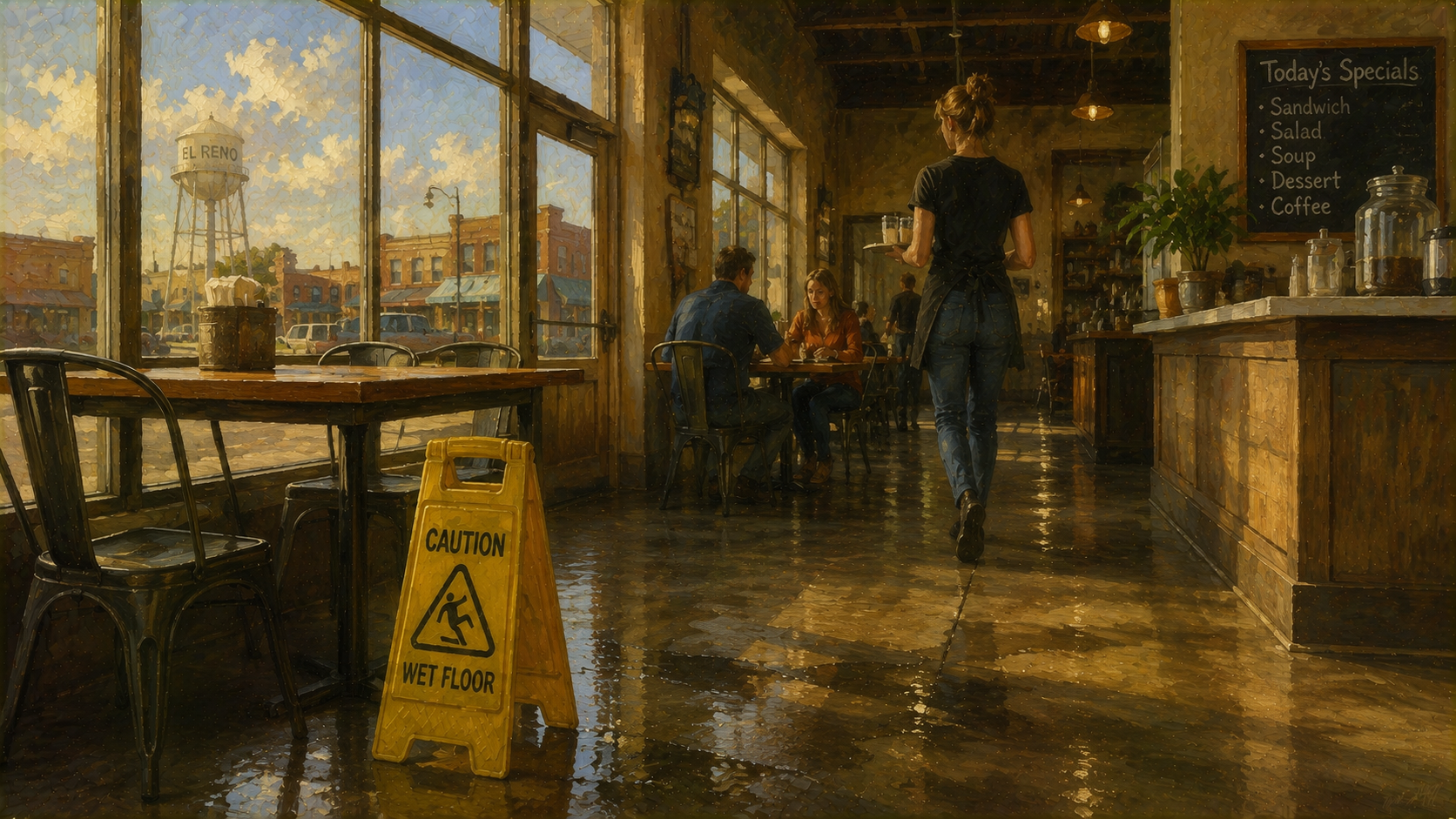
- Freshly mopped restroom or entryway floors without adequate wet floor signage placed in visible locations before customers approach
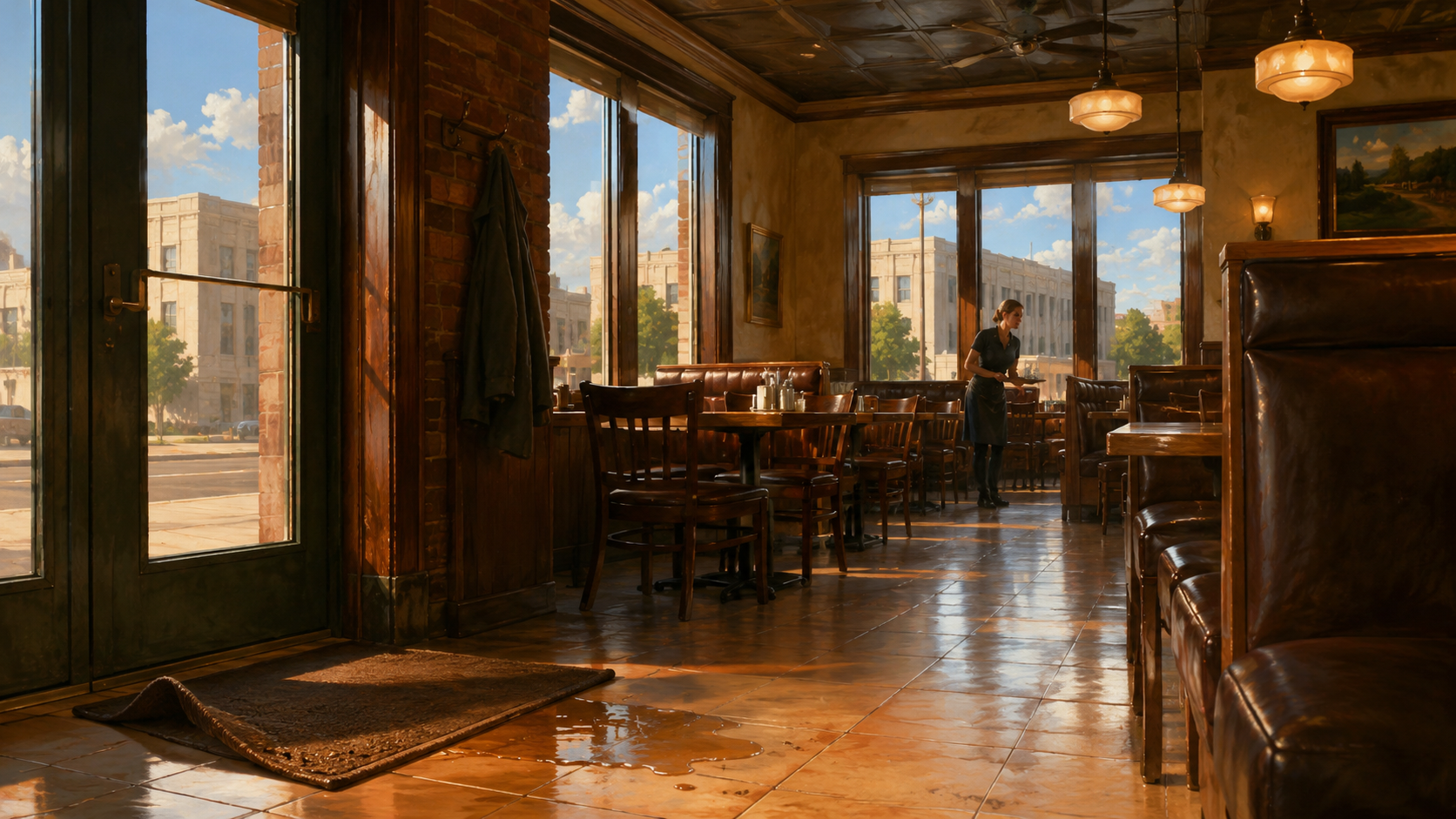
- Slippery or missing entrance mats near restaurant doorways during Oklahoma’s rain and ice seasons
- Uneven, cracked, or damaged tile near high-traffic areas such as entryways, hostess stands, and restroom corridors
- Poorly lit parking lots and exterior walkways adjacent to the restaurant property
- Ice or standing water accumulating near entrances during winter weather that is not treated or adequately warned against
The restaurant industry operates with full knowledge of these hazards — which is precisely why Oklahoma premises liability law imposes a clear and active duty of care on restaurant owners and operators to manage floor conditions throughout every hour they are open to the public.
What the Restaurant Was Required to Do Under Oklahoma Law
Under Oklahoma premises liability law, every restaurant owes a legal duty of care to every customer who enters. That duty requires the business to maintain the premises in a reasonably safe condition — actively and continuously, not just at opening or during slow periods. It encompasses three core obligations:
- Inspect — restaurant management and staff must actively monitor floor conditions and common areas throughout service, not simply react after someone is hurt
- Correct — known hazards must be addressed promptly, not left in place while customers continue to move through the dining room, restrooms, or entryway
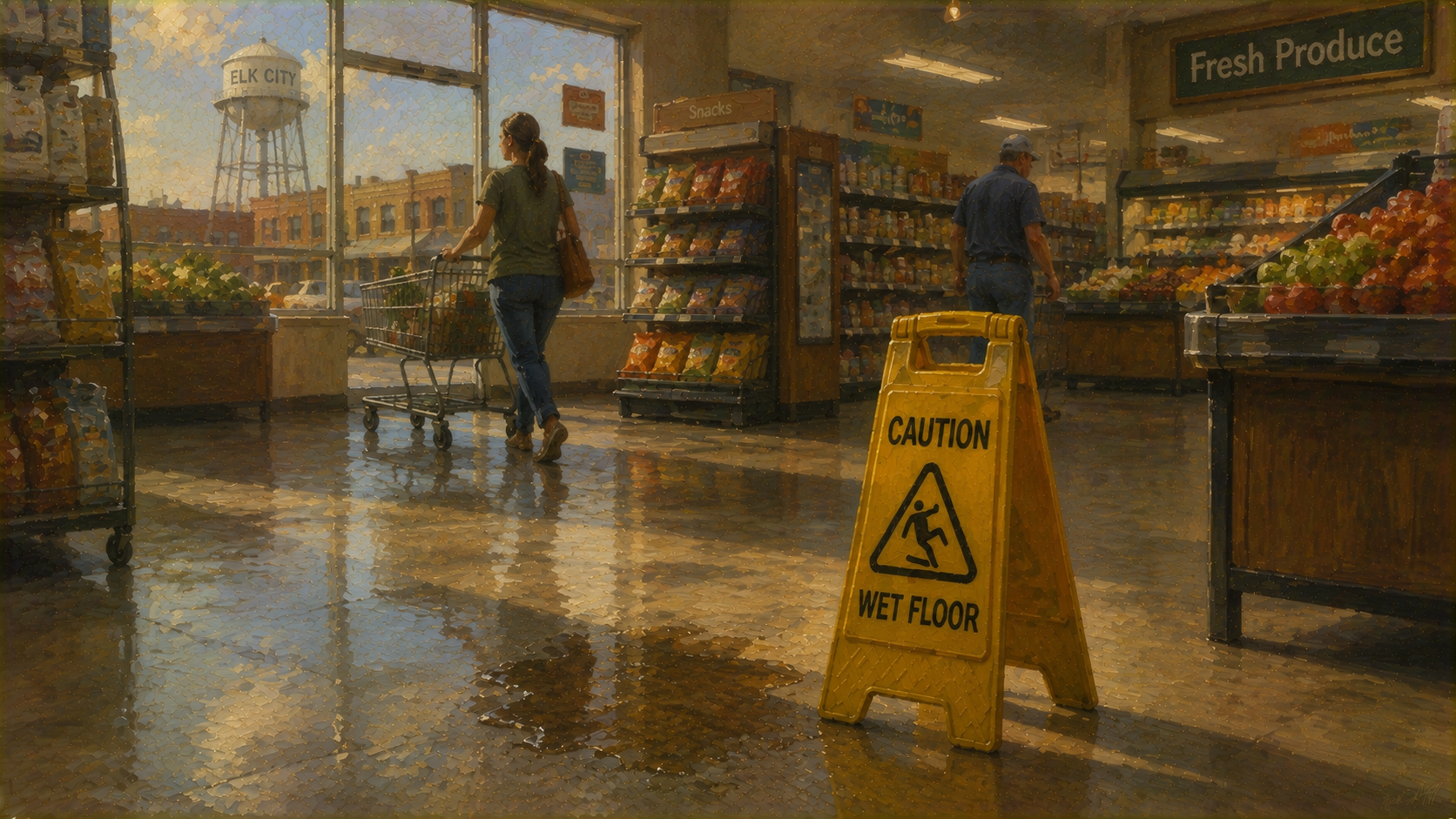
- Warn — when a hazard cannot be immediately corrected, the restaurant must place clear and visible warnings that give approaching customers a meaningful opportunity to avoid the danger
When a Chickasha restaurant falls short of any of these obligations and a customer is injured as a result, the business — and in some cases the property owner if the restaurant operates as a tenant — may be held legally responsible for the full scope of the victim’s damages.
The Steps to Take After a Chickasha Restaurant Fall
This is where the title of this post matters most. The steps you take in the immediate aftermath of a slip and fall at a Chickasha restaurant are not just practical advice — they are the foundation of your legal claim. Each step either strengthens or weakens what you will be able to prove later, and the window for taking these steps correctly is short.
Step 1 — Report the incident to management before you leave. Find the manager on duty and tell them what happened. Ask that an official incident report be completed and request a written copy before you leave the restaurant. If they will not provide a copy, write down the manager’s name and note that a report was filed. Do not leave without making the incident part of the restaurant’s official record.
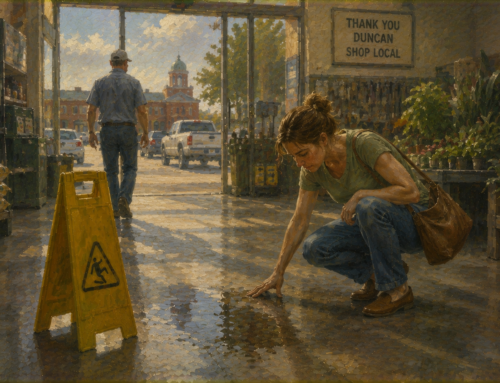
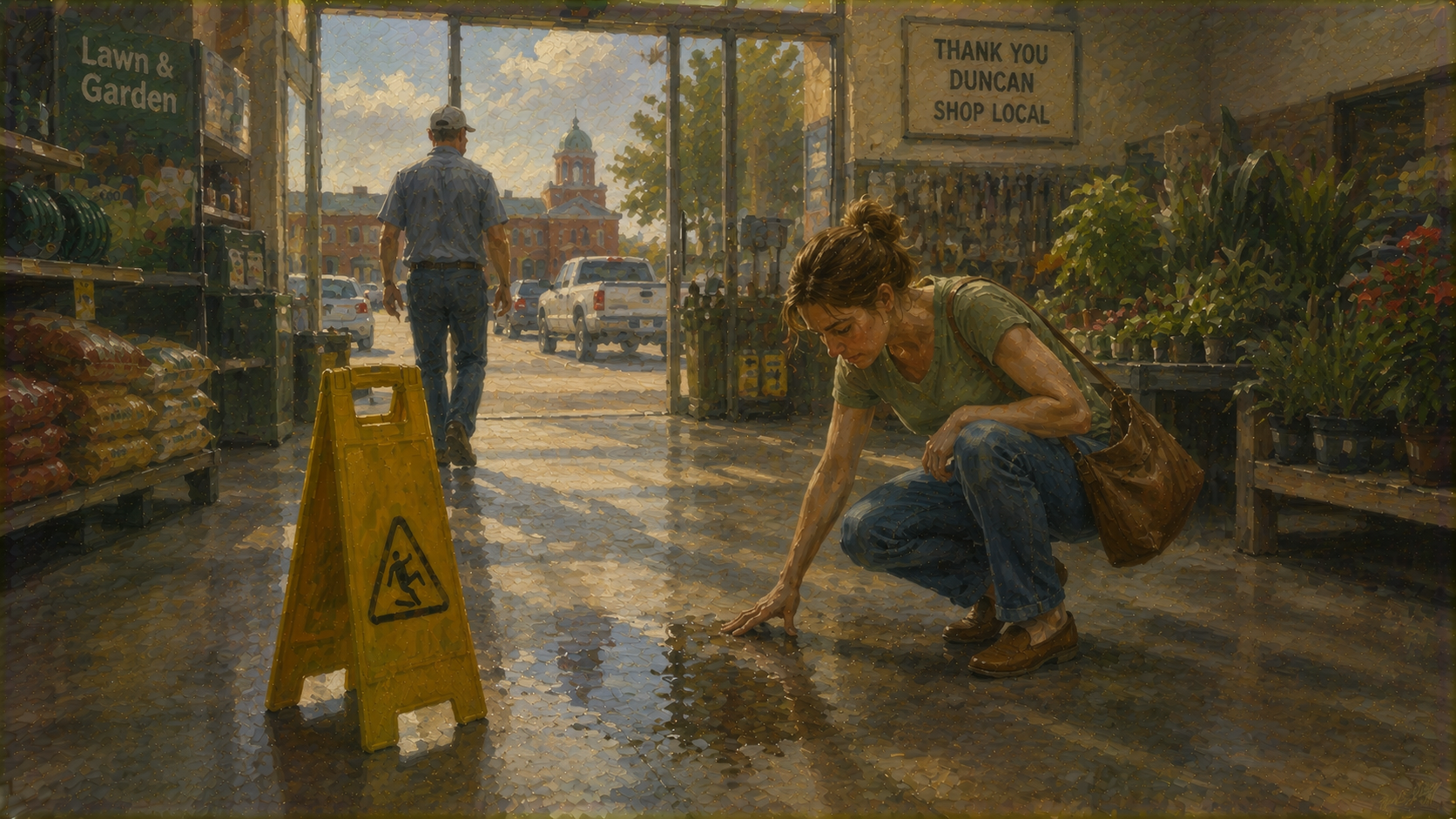
Step 2 — Photograph everything at the scene. Before the hazard is cleaned up or the area is cleared, take photos of the condition that caused your fall — the spill, the wet floor, the missing mat, the damaged tile — and the surrounding area including any wet floor signs that were or were not in place. Photograph your visible injuries and the footwear you were wearing at the time.
Step 3 — Collect witness information. Note the names of any employees who responded to the scene and the time the accident occurred. Collect contact information from other diners or bystanders who observed the fall — their accounts of what they saw are valuable independent evidence that does not come from either party to the dispute.
Step 4 — Seek medical attention the same day. Even if your injuries feel manageable in the immediate aftermath, see a doctor before the day is over. Adrenaline and shock can mask pain, and injuries like concussions, spinal damage, and internal soft tissue injuries frequently worsen significantly before they improve. Prompt medical care protects your health and creates the documented connection between the accident and your injuries that is essential to your claim.
Step 5 — Preserve your footwear. The shoes you were wearing at the time of a slip and fall can become relevant evidence — both to establish the conditions that caused the fall and to counter arguments that your footwear contributed to the accident. Set them aside and do not wear them again until your case is resolved.
Step 6 — Contact a personal injury attorney before speaking with the restaurant’s insurer. The restaurant’s insurance company will likely reach out after an incident report is filed. Do not give a recorded statement, sign any documents, or discuss settlement figures before you have spoken with an attorney who represents your interests — not theirs.
Why Surveillance Footage Is the Most Urgent Priority
Most Chickasha restaurants maintain camera systems covering their dining rooms, entryways, and sometimes exterior areas and parking lots. That footage can answer the questions that most directly determine the outcome of your case — how long the hazard existed before you fell, whether any staff members were nearby and failed to act, and exactly what conditions were present at the moment of your accident.
It can also be permanently gone within 24 to 72 hours. Restaurant surveillance systems typically operate on rolling overwrite cycles, and once footage is overwritten, it cannot be recovered. An attorney who acts the same day or the day after your accident can send a formal legal preservation request that compels the restaurant to retain the footage before the cycle overwrites it. That request is one of the first things we do when a client contacts us after a restaurant fall — and it is one of the most time-sensitive steps in the entire process.
Common Injuries in Chickasha Restaurant Slip and Fall Cases
Hard tile and polished concrete flooring, common in restaurant environments, provide little protection when a customer falls unexpectedly, and the injuries that result are frequently more serious than the setting suggests. Injuries seen in Chickasha restaurant slip and fall cases include:
- Hip fractures requiring surgery and extended rehabilitation — particularly serious and potentially life-altering for older adults
- Broken wrists or arms from bracing a fall against hard flooring or nearby furniture
- Knee injuries, including torn meniscus or ACL damage, require surgical repair
- Traumatic brain injuries or concussions from striking the floor or nearby tables, chairs, or fixtures
- Cervical and lumbar spine injuries producing chronic pain or limited mobility long after the initial accident
- Shoulder injuries from the rotational force of an unexpected fall
Many of these injuries require months of follow-up treatment — physical therapy, specialist visits, imaging studies, and time away from work — costs that accumulate well beyond what an initial insurance offer reflects.
Talk to a Chickasha Slip and Fall Lawyer
Restaurants and their insurance carriers handle these claims regularly and are experienced at minimizing what they pay out. From the moment an incident report is filed, the restaurant’s documentation process begins — often in ways designed to support their defense rather than your claim. Having an experienced premises liability attorney representing you early changes that dynamic entirely.
To learn more about how we help slip and fall victims across Chickasha and Grady County, visit our Chickasha slip and fall personal injury page.
If you’re ready to talk about what happened, request a free case review or call (405) 447-HURT today.