Guthrie’s historic downtown, with its preserved brick buildings, shops, restaurants, and event venues, draws visitors from across Oklahoma. Add the retail and hotels near the I-35 interchange and the businesses along Division Street and US-77, and Guthrie’s commercial spaces see steady foot traffic from locals and out-of-town guests. Older buildings, busy event weekends, and constant coming and going create conditions where falls happen.
If you were hurt in a slip and fall at a Guthrie business, Oklahoma premises liability law may give you the right to hold the property owner accountable.
What Oklahoma Law Requires of Guthrie Business Owners
Any business open to the public in Guthrie owes its customers a duty to keep the premises reasonably safe. That duty has three parts:
- Inspect: the business must actively look for hazards, not wait for someone to get hurt
- Correct: once a hazard is known, it must be fixed within a reasonable amount of time
- Warn: if a hazard can’t be fixed right away, the business must post a clear, visible warning
When a business falls short and a customer is injured, the business may be liable. If it rents its space, the property owner may share responsibility for hazards in areas the landlord controls, such as sidewalks, entryways, stairs, and parking lots.
Hazards That Cause Falls at Guthrie Businesses
Guthrie’s mix of historic and modern properties creates some hazards worth noting. Common causes of falls include:
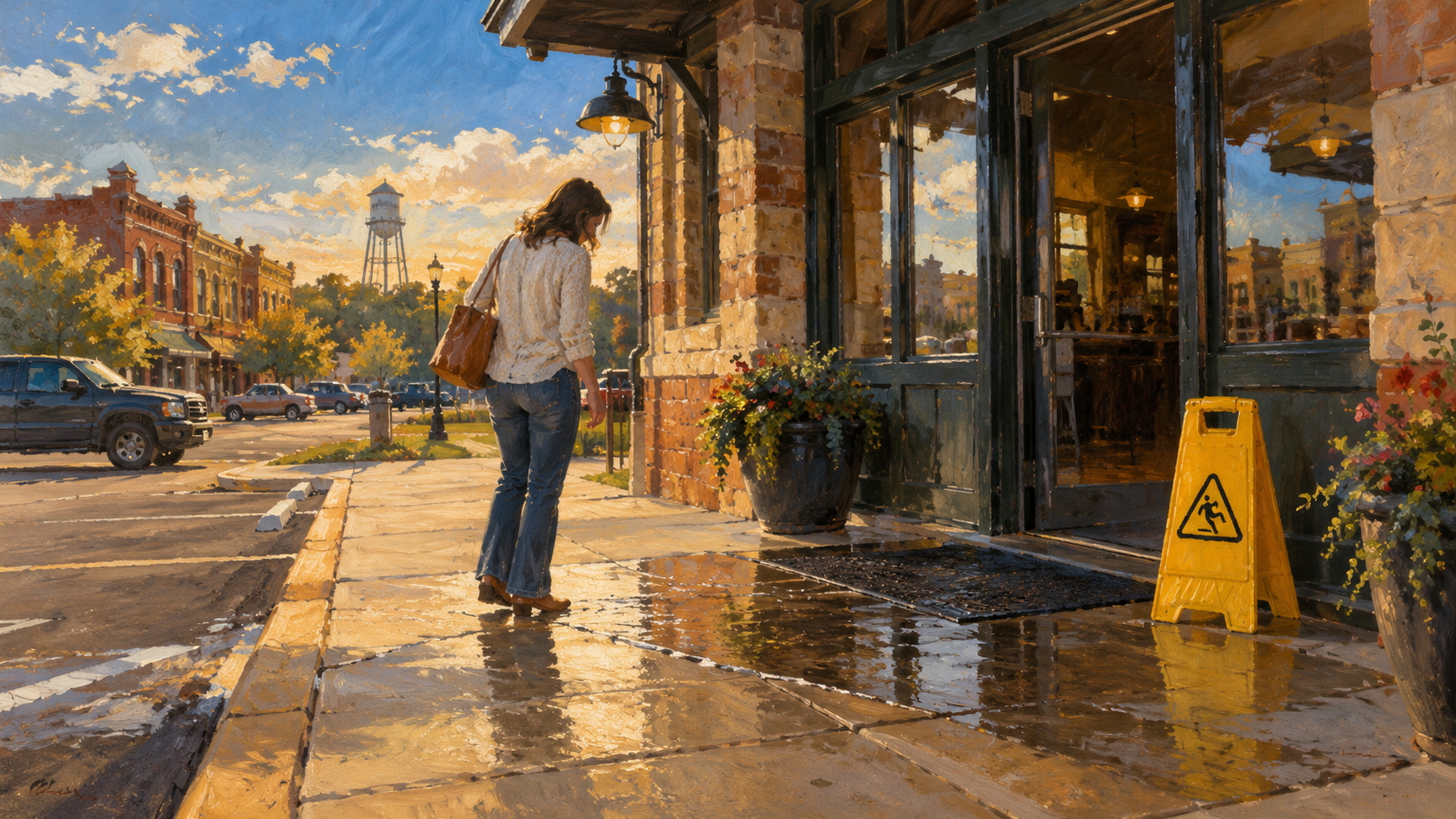
- Wet or freshly mopped floors without visible warning signs
- Spills in restaurants, grocery aisles, and convenience stores left too long
- Uneven floors, worn thresholds, and steps in older downtown buildings
- Stairs and ramps without proper handrails, lighting, or markings
- Cracked, raised, or uneven sidewalks and curbs along the downtown streets
- Torn or bunched entrance mats during rain, ice, and snow
- Poor lighting in entryways, stairwells, and parking areas
- Ice or standing water near entrances in winter
- Cluttered walkways during busy events and festivals
Older buildings aren’t exempt from the duty of care. A business that chooses to operate in one is still expected to identify and address hazards or warn about them.
Who May Be Responsible
Responsibility depends on who controlled the area where you fell. Depending on the facts, liable parties may include:
- The business operator, for hazards inside the store, restaurant, or venue
- The property owner, if the business is a tenant and the hazard was in a common area, stairway, sidewalk, or lot the landlord maintains
- A maintenance or cleaning contractor, if its work created the hazard, such as a wet floor left without a sign
- A government entity, in some cases involving public sidewalks or buildings, which can have different notice requirements and deadlines
Identifying every responsible party early matters, because it affects which insurance policies may be available and which notice rules apply.
The Notice Question
Proving a hazard existed isn’t always enough. A premises liability claim typically requires showing the owner knew about the hazard, or should have known through reasonable inspection, and failed to act. Evidence can include:
- Surveillance footage showing how long the hazard was there
- Inspection and maintenance logs
- Employee statements about prior awareness
- Earlier complaints or incidents involving the same hazard
- The condition of the hazard itself, such as a worn mat or a long-damaged stair
Surveillance footage is often the strongest evidence, and it’s often overwritten within 24 to 72 hours.
Steps to Take After a Fall
If you’re able, take these steps:
- Report the fall to the manager or owner and ask for a written incident report
- Photograph the hazard, the surrounding area, and your injuries
- Take pictures of your shoes, and keep them
- Collect names and contact information for witnesses
- See a doctor the same day, even if you feel okay
- Don’t give a recorded statement to the business’s insurer or sign anything before talking to an attorney
Common Injuries in Business Falls
Hard floors, stone steps, and concrete sidewalks give little cushion. Injuries often include:
- Hip fractures that may need surgery and long rehabilitation, especially for older adults
- Broken wrists, arms, and ankles
- Knee injuries, including torn ligaments
- Concussions and other head injuries
- Back and neck injuries that can cause chronic pain
What Compensation May Be Available
If a property owner’s negligence caused your fall, you may be able to recover compensation for:
- Medical bills and future treatment costs
- Lost wages and reduced earning capacity
- Pain and suffering
- Out-of-pocket expenses related to your injury
Talk to a Guthrie Slip and Fall Lawyer
Property owners and their insurers handle these claims regularly and often move quickly to limit what they pay. An attorney can send preservation letters, identify every responsible party, and make sure your claim reflects the true cost of your injuries.
To learn more about how we help slip and fall victims in Guthrie and Logan County, visit our Guthrie slip and fall lawyer page.
If you’re ready to talk through what happened, request a free case review or call (405) 447-HURT today.