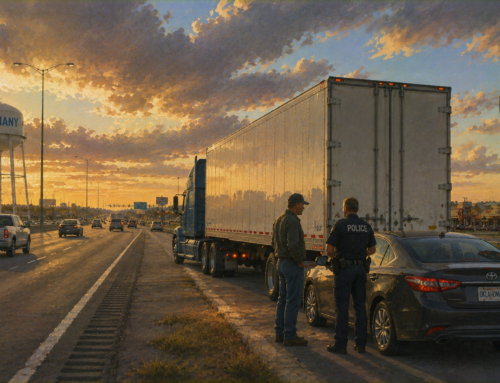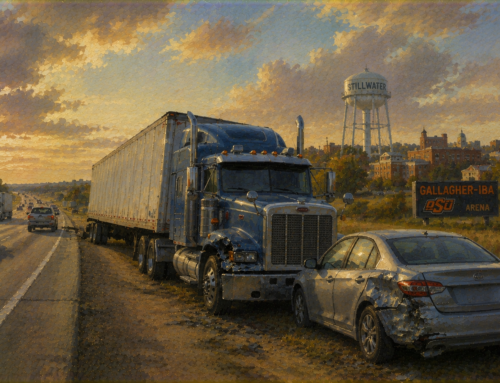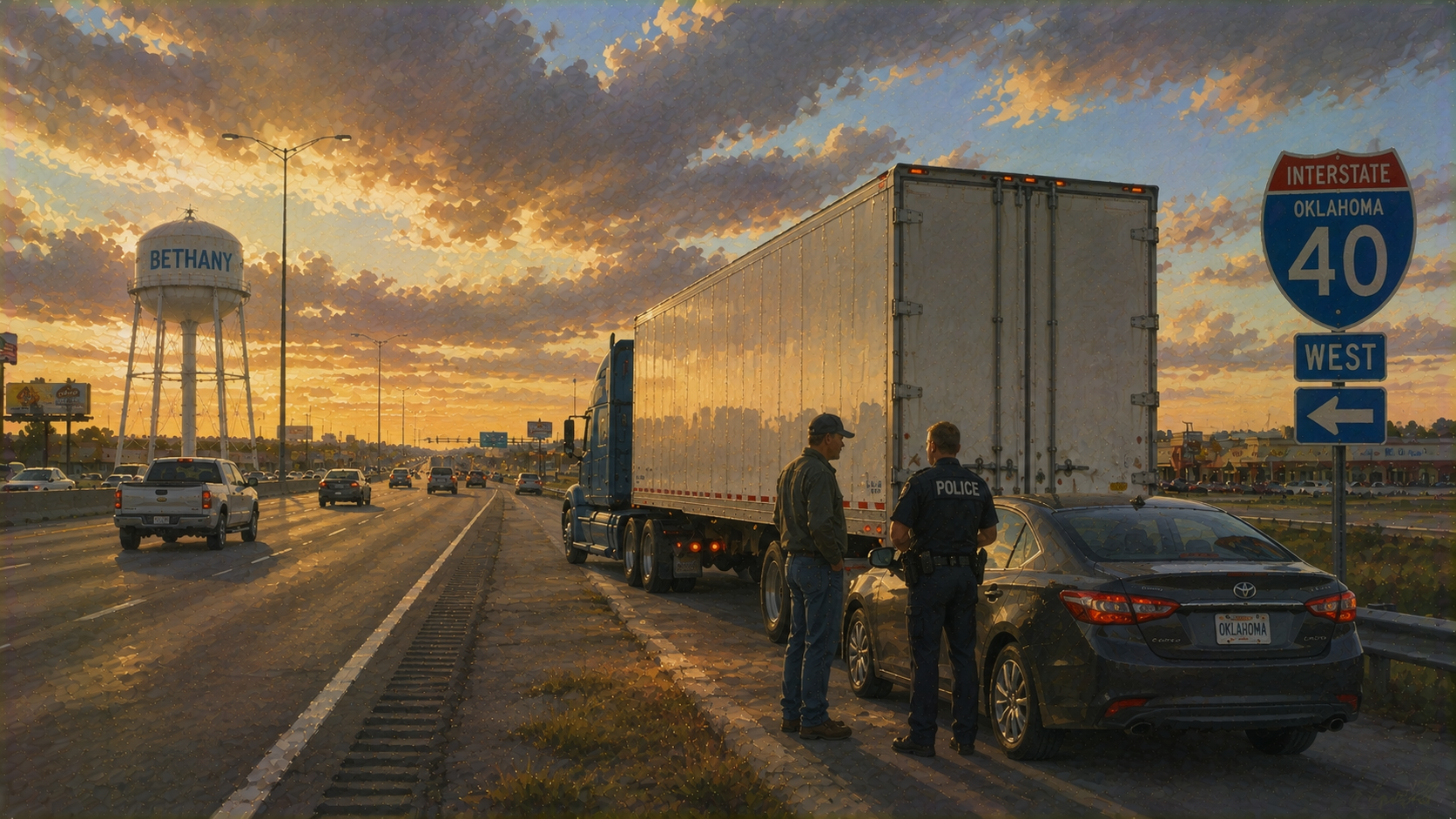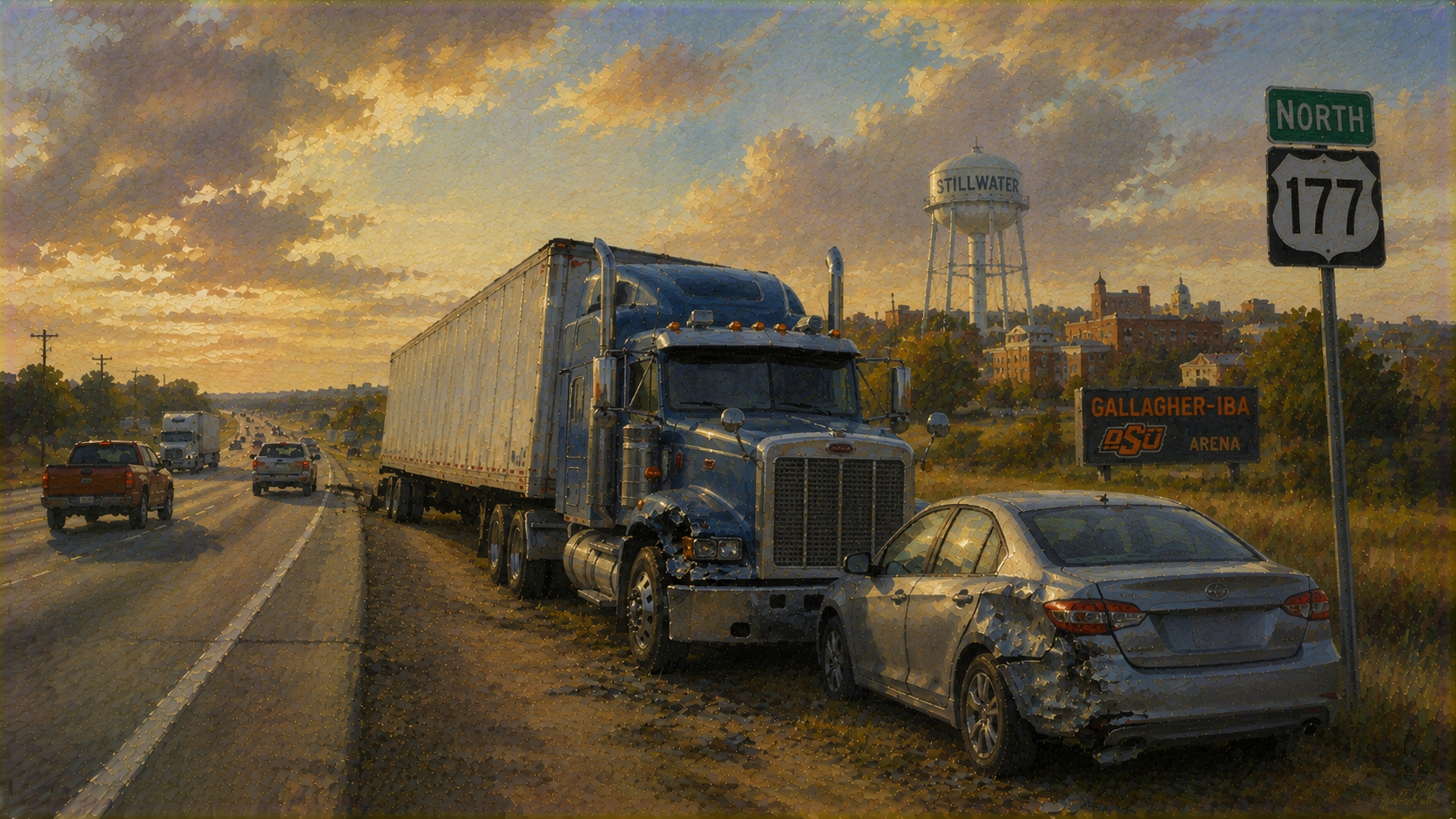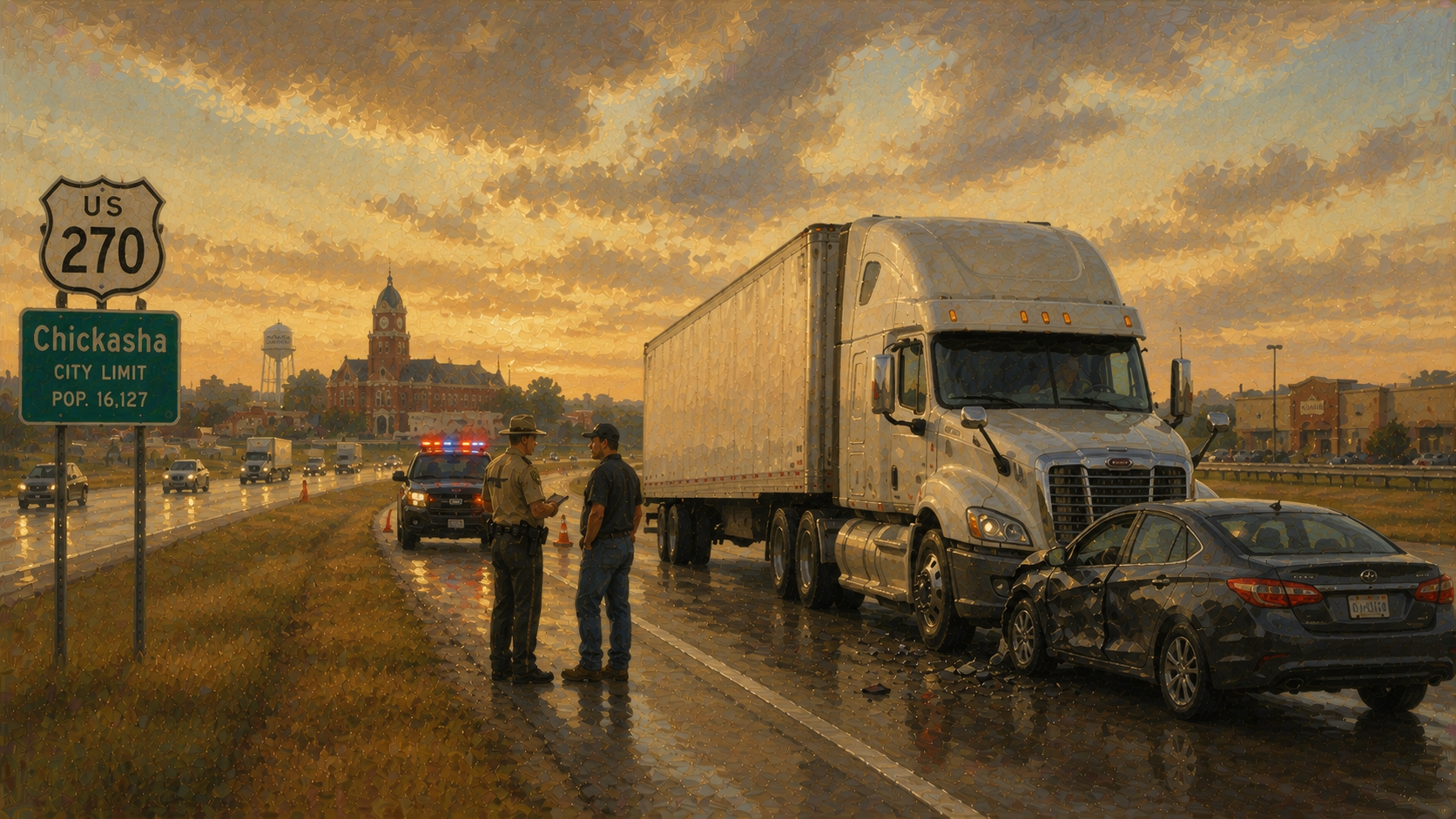
US-270 runs through the heart of Grady County, connecting Chickasha to surrounding communities and carrying a consistent flow of commercial and freight traffic through some of central Oklahoma’s most active agricultural and industrial corridors. When a semi-truck is involved in a collision on this highway, the consequences for anyone in a passenger vehicle are rarely minor — and the legal process that follows is rarely simple.
If you or someone in your family was injured in a semi wreck on US-270 near Chickasha, understanding why these cases are fundamentally different from standard car accident claims is one of the most important things you can do before making any decisions about your recovery.
Why US-270 Through Grady County Creates Semi Wreck Risk
The US-270 corridor through and around Chickasha serves a unique mix of traffic that reflects the economic character of Grady County — agricultural, industrial, and increasingly connected to the broader Oklahoma City metro. That mix puts passenger vehicles alongside large commercial vehicles in conditions that demand constant attention from every driver on the road.
Factors that contribute to semi wrecks on US-270 near Chickasha include:
- Heavy agricultural transport traffic during planting and harvest seasons, when oversized loads and slow-moving equipment share the highway with through traffic
- Oilfield service vehicles and equipment haulers operating throughout Grady County’s active energy production areas
- Commercial freight moving between Chickasha and the I-44 corridor to the northeast and Lawton to the southwest
- Speed and sight-line challenges on rural stretches of US-270 where the road curves or crests in ways that limit a driver’s ability to react in time to a slow or stopped vehicle
- Driver fatigue among long-haul and regional operators who use US-270 as a connecting route between larger interstate corridors
- Weather-related hazards including ice and fog that reduce traction and visibility on open Grady County stretches
When any of these factors combine with the size and weight of a fully loaded commercial truck, the results for occupants of a passenger vehicle can be catastrophic.
What Makes Semi Wreck Cases More Complex Than Car Accident Claims
The complexity of a semi wreck case begins with a simple fact: there are more parties involved, more regulations at play, and more evidence to pursue than in a standard two-car collision. Each of those dimensions adds legal complexity — and each represents an opportunity to identify compensation sources that victims who navigate these cases alone frequently miss.
Multiple Parties May Share Liability
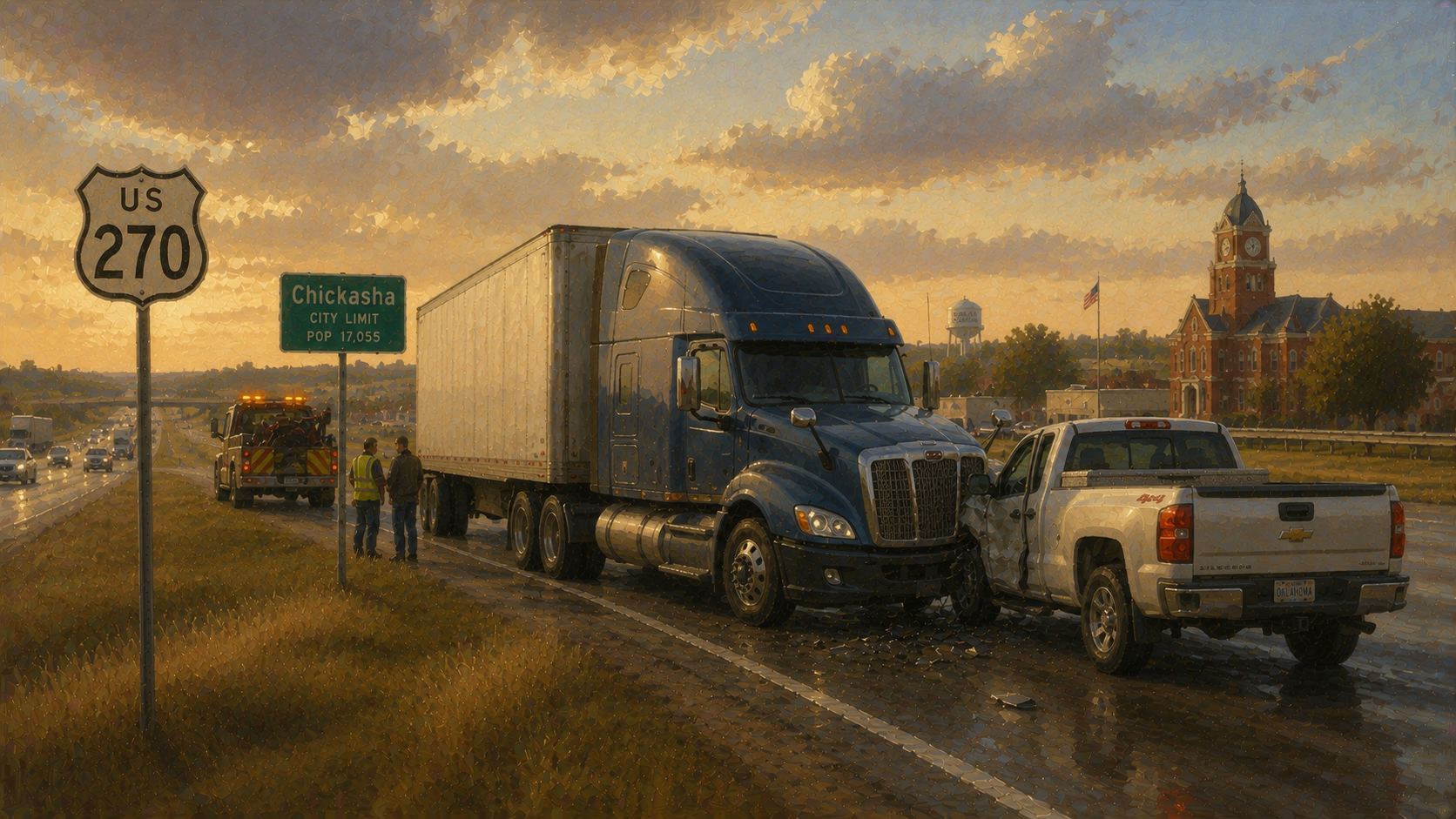
In a standard car accident, liability typically centers on the at-fault driver. In a commercial trucking case, the picture is significantly broader. Depending on how the accident occurred, potentially liable parties in a US-270 Chickasha semi wreck may include:
- The truck driver — for hours-of-service violations, distracted or impaired driving, speeding, or failure to maintain safe following distances
- The trucking company — for negligent hiring or training, failure to enforce safety compliance, or scheduling practices that effectively pressure drivers to exceed legal driving limits
- The owner of the tractor or trailer — frequently a separate entity in leased equipment arrangements common in commercial trucking
- A cargo company or shipper — if improperly loaded, unsecured, or overweight freight contributed to the crash or affected the truck’s handling
- A maintenance provider — if a mechanical defect such as brake failure or tire blowout resulting from inadequate inspection played a role
- A parts or vehicle manufacturer — in cases where a component defect contributed to the accident independent of maintenance practices
Identifying all potentially liable parties is not just a legal formality — it directly determines the total compensation available to you and your family.
Federal Regulations Govern Every Aspect of Commercial Trucking
Commercial trucking on US-270 and throughout Oklahoma is regulated at the federal level by the Federal Motor Carrier Safety Administration. These regulations establish clear, mandatory standards for how long drivers can operate without rest, how vehicles must be inspected and maintained, how cargo must be loaded and secured, and what qualifications drivers must hold.
When a trucking company or driver violates those standards — whether by falsifying logbooks, skipping required pre-trip inspections, ignoring weight limits, or pushing drivers past legal hours — that violation becomes direct evidence of negligence. It also means your attorney must be familiar not just with Oklahoma personal injury law but with the full body of federal trucking regulations that apply to the case.
Critical Evidence Has a Narrow Window
This is where the complexity of semi wreck cases becomes most urgent for victims. Commercial trucks generate a significant volume of data and documentation that is directly relevant to establishing what happened and who is responsible — but much of that evidence is time-sensitive in ways that standard car accident evidence is not.
Key evidence in a US-270 Chickasha semi wreck case may include:
- Electronic logging device data recording the driver’s hours and location in the period leading up to the crash
- The truck’s event data recorder — often called a black box — capturing speed, braking, and steering inputs in the moments before impact
- Onboard dashcam footage if the truck was equipped with interior or exterior cameras
- Driver qualification files including training history, prior accident history, and licensing records
- Vehicle inspection and maintenance logs
- Cargo manifests and weight documentation
- Post-accident drug and alcohol testing results
- Cell phone records if distracted driving is suspected
Some of this data — particularly electronic logging device records — is subject to automatic overwriting on cycles as short as 30 days. A legal hold letter sent promptly after the accident can compel the trucking company to preserve it. Without that letter, the window closes and the data may be gone permanently.
The Trucking Company Is Not on Your Side
One of the most important things to understand after a serious semi wreck on US-270 is that the trucking company’s interests and your interests are directly opposed from the moment the accident is reported. Large carriers have established protocols for responding to serious crashes — protocols designed to document the scene, manage witnesses, and begin building a defense before injury victims have had a chance to seek legal counsel.
Their insurers are experienced, well-resourced, and motivated to minimize what they pay. Victims who engage with the trucking company’s representatives — giving recorded statements, accepting early offers, or signing documents — without legal representation frequently compromise their claims in ways that are difficult or impossible to reverse.
What Compensation May Be Available
Semi wreck injuries frequently produce losses that extend well beyond the immediate aftermath of the crash. Depending on the circumstances of your case, compensation may include:
- Emergency medical care, surgery, and hospitalization
- Long-term rehabilitation and ongoing treatment costs
- Lost wages during recovery and reduced future earning capacity
- Pain and suffering and loss of enjoyment of life
- Property damage and transportation expenses
- Future medical costs for injuries requiring permanent or extended care
- Wrongful death damages if the accident resulted in the loss of a family member
Because commercial carriers are required to carry substantially higher insurance limits than individual drivers, the potential compensation in a serious semi wreck case is often significantly greater than in a standard car accident claim — and so is the sophistication of the opposition you will face in pursuing it.
Talk to a Chickasha Semi Wreck Lawyer
The complexity of a semi wreck case on US-270 is not something to navigate alone — particularly when the trucking company and their insurers are already working the case. Getting experienced legal representation engaged early is one of the most consequential decisions an injury victim can make.
To learn more about how we help semi wreck victims across Chickasha and Grady County, visit our Chickasha semi wreck personal injury page.
If you’re ready to discuss what happened, request a free case review or call (405) 447-HURT today.

Do You Need a Lawyer after a Semi Wreck?
Of course. First, your experience with the lawyers of Aldridge Teasdale is free of charge. Our job is to take the burden off of you and then get you and your family compensated for all of your losses. Semi Wrecks can leave people with catastrophic injuries.
We will get you compensation resulting from:
- Medical treatment.
- Loss of income.
- Continuing pain.
- Loss of life and use.
- Punitive damages
- Pain and suffering
- Loss of loved one
- Loss of support
- Permanent injuries
- Scarring
- Future medical requirements
- Loss of future work
Contact the law firm of Aldridge Teasdale today for a FREE consultation.