Duncan’s commercial corridors serve as the economic center of Stephens County, drawing steady daily traffic from local residents, oilfield workers, and visitors passing through south-central Oklahoma. The businesses along these corridors — grocery stores, restaurants, retail locations — carry a clear legal obligation to every customer who walks through their doors. When they fail to meet it, serious injuries follow.
If you were hurt in a slip and fall at a Duncan business, here’s exactly what Oklahoma law requires of the property owner — and what your options are when they fall short.
What Oklahoma Premises Liability Law Requires
Every business open to the public in Duncan owes a legal duty to maintain its premises in a reasonably safe condition. That duty breaks down into three specific obligations:
- Inspect regularly — the obligation to identify hazards is active and ongoing, not a box checked once at opening. Conditions change throughout the business day, and the duty to catch them changes with it.
- Correct known hazards promptly — once a dangerous condition is identified, it must be addressed within a reasonable timeframe. Leaving a known hazard in place while customers continue moving through the space is a direct failure of this duty.
- Warn customers about hazards that can’t be immediately fixed — when a hazard exists that can’t be corrected right away, clear and visible warnings must be placed where approaching customers can see them.
When a Duncan business fails to meet any of these three obligations and a customer is injured as a result, the business — and in some cases the property owner if the operator is a tenant — may be held legally liable for the full scope of the victim’s damages.
Common Hazards at Duncan Businesses
Slip and fall accidents at Duncan businesses happen in predictable locations from predictable causes:
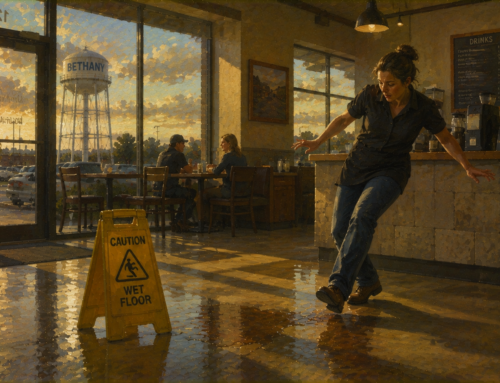
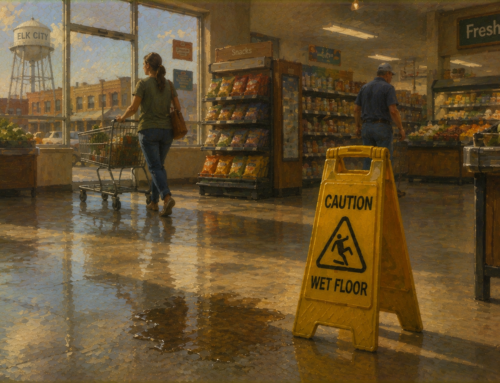
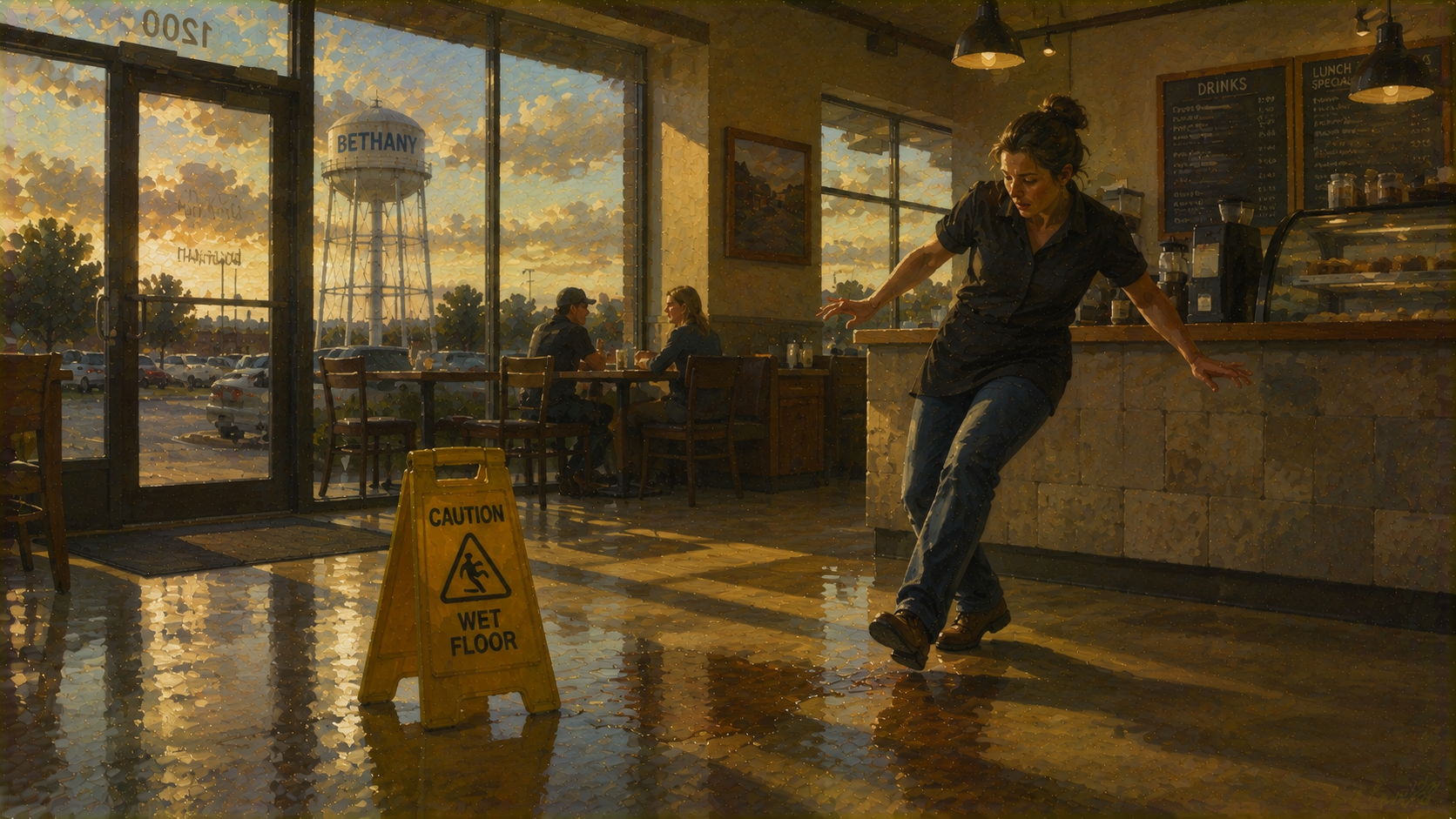
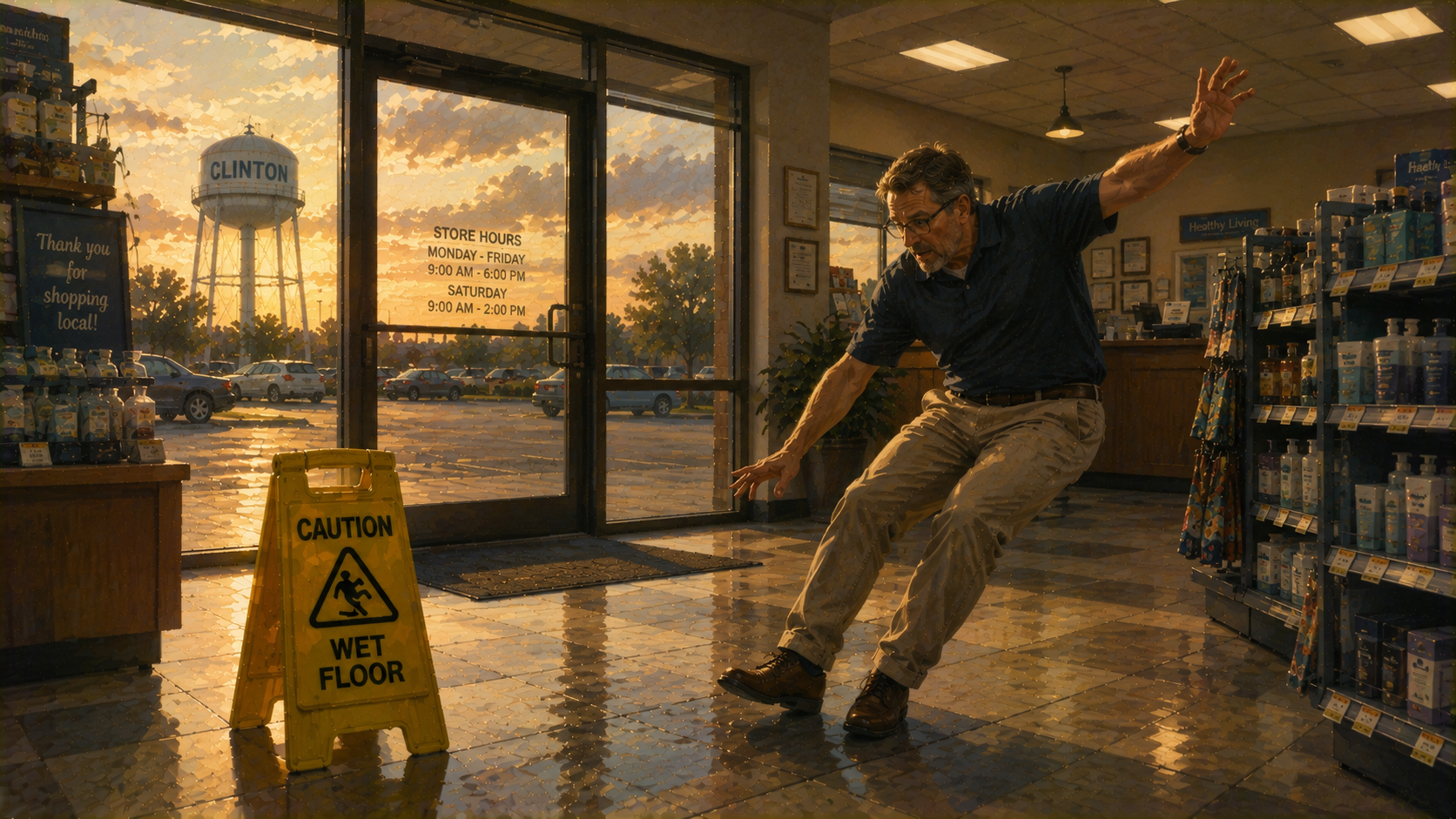
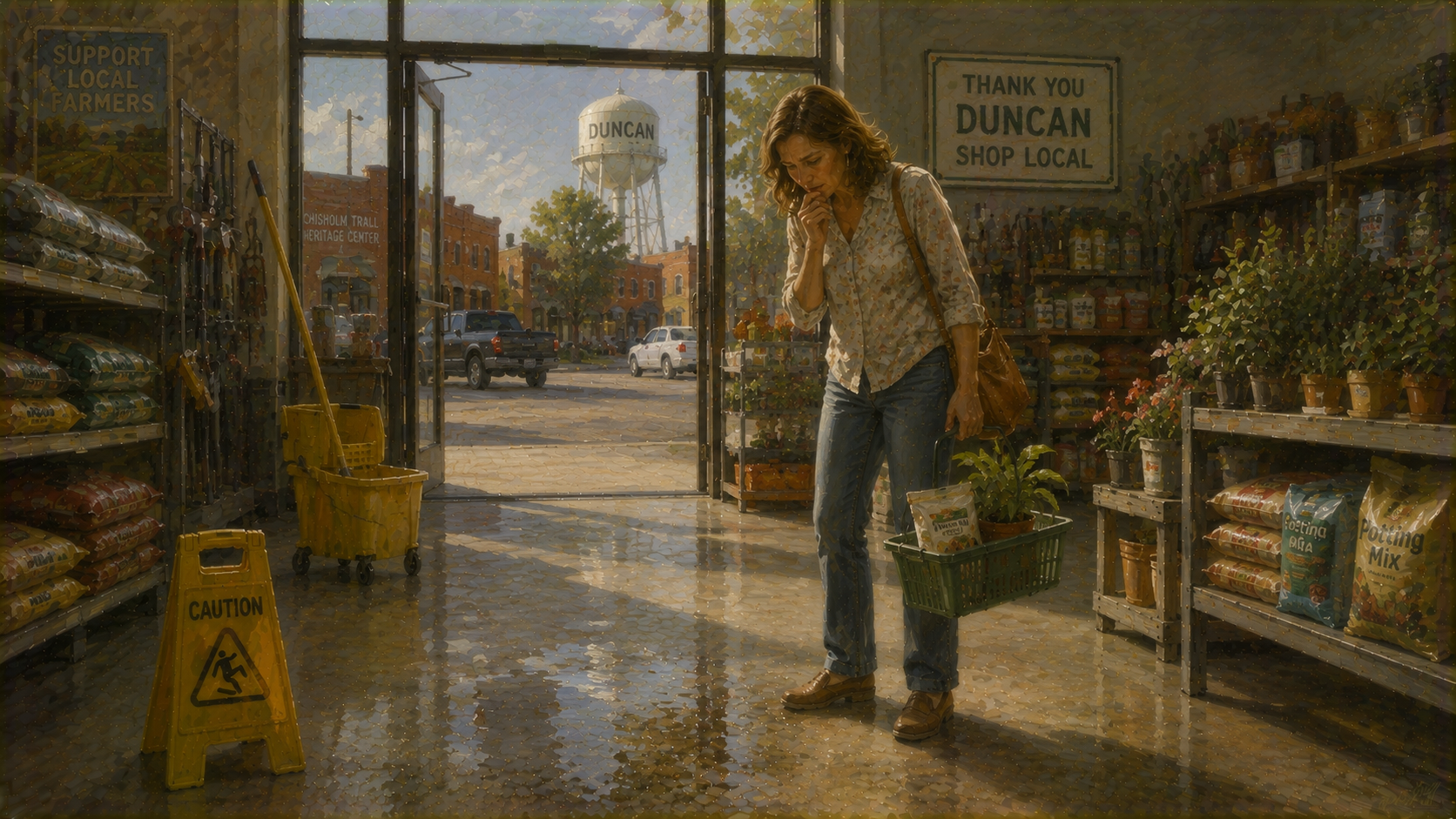
- Wet or recently mopped floors without adequate warning signage
- Spilled food or beverages in grocery aisles or restaurant dining rooms left unaddressed
- Torn or bunched entrance mats during Oklahoma’s wet weather seasons
- Cracked pavement or deteriorating asphalt in parking lots
- Poor lighting in store interiors or exterior walkways
- Ice or standing water near entrances during winter weather
The Notice Question
Establishing that a hazard existed is only part of the case. Oklahoma law also requires showing the property owner knew — or should have known through reasonable inspection — about the condition before the accident occurred. Evidence that establishes this includes:
- Surveillance footage showing how long the hazard was present
- Maintenance logs revealing whether the area was recently checked
- Employee statements about prior awareness of the condition
- Prior complaints involving the same hazard or location
Surveillance footage is frequently the most decisive evidence — but it operates on rolling overwrite cycles as short as 24 to 72 hours, so requesting preservation quickly matters.
Common Injuries in Duncan Business Slip and Fall Cases
Hard commercial flooring offers little protection when a customer falls unexpectedly. Common injuries include hip fractures requiring surgery, broken wrists, torn knee ligaments, traumatic brain injuries, and spinal injuries that produce chronic pain well beyond the initial accident.
Steps to Take After a Fall
If you’re physically able:
- Report the incident to management and request a written incident report
- Photograph the hazard, the surrounding area, and your injuries
- Collect contact information from any witnesses
- Seek medical attention the same day, even if injuries feel manageable
- Don’t give a recorded statement to the business’s insurer before speaking with an attorney
Talk to a Duncan Slip and Fall Lawyer
To learn more about how we help slip and fall victims across Duncan and Stephens County, visit our Duncan slip and fall lawyer page.
If you’re ready to talk about what happened, request a free case review or call (405) 447-HURT today.