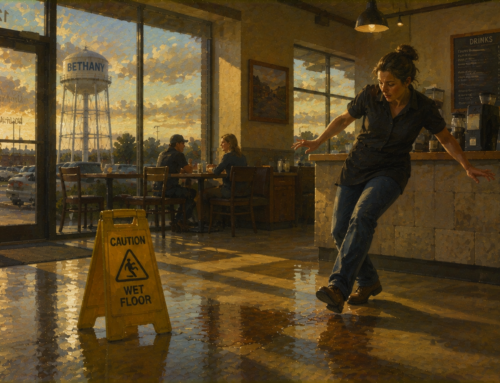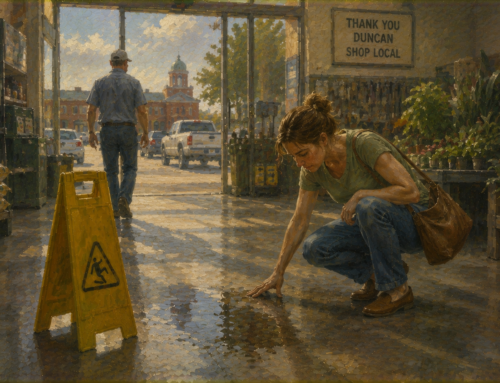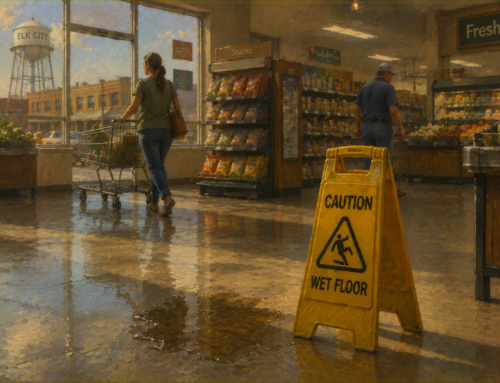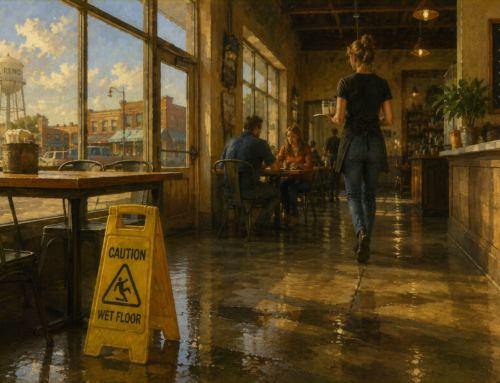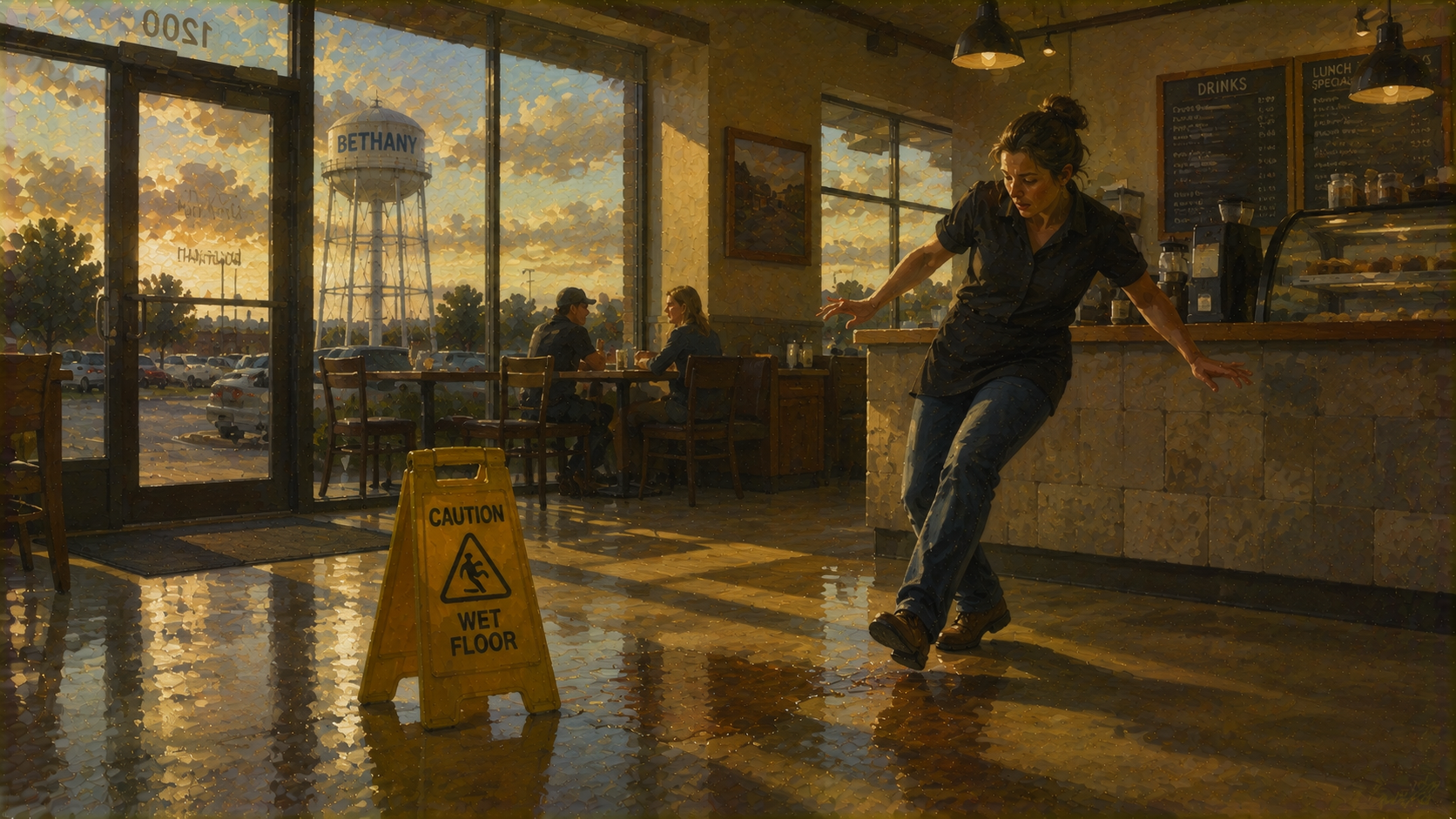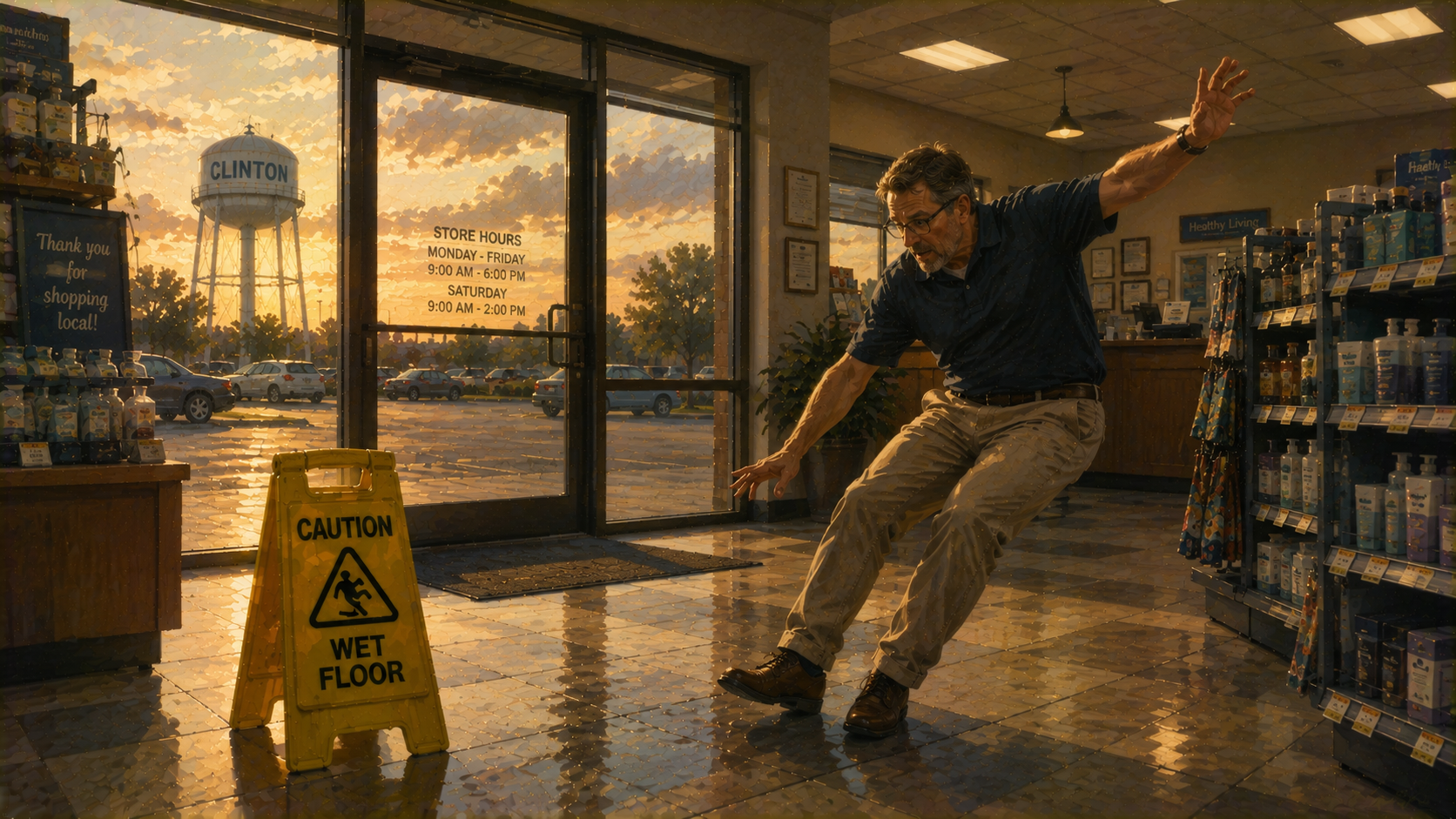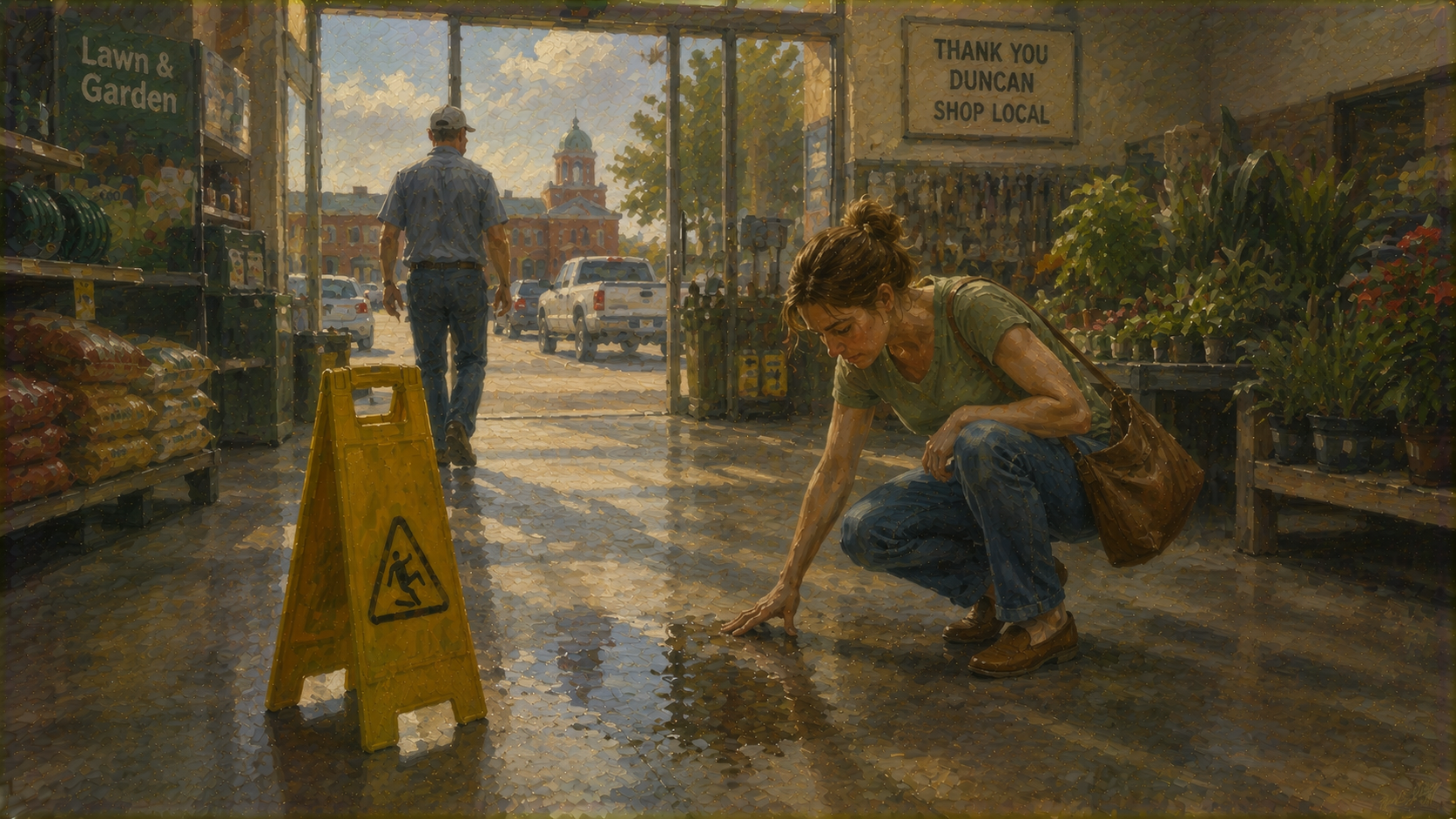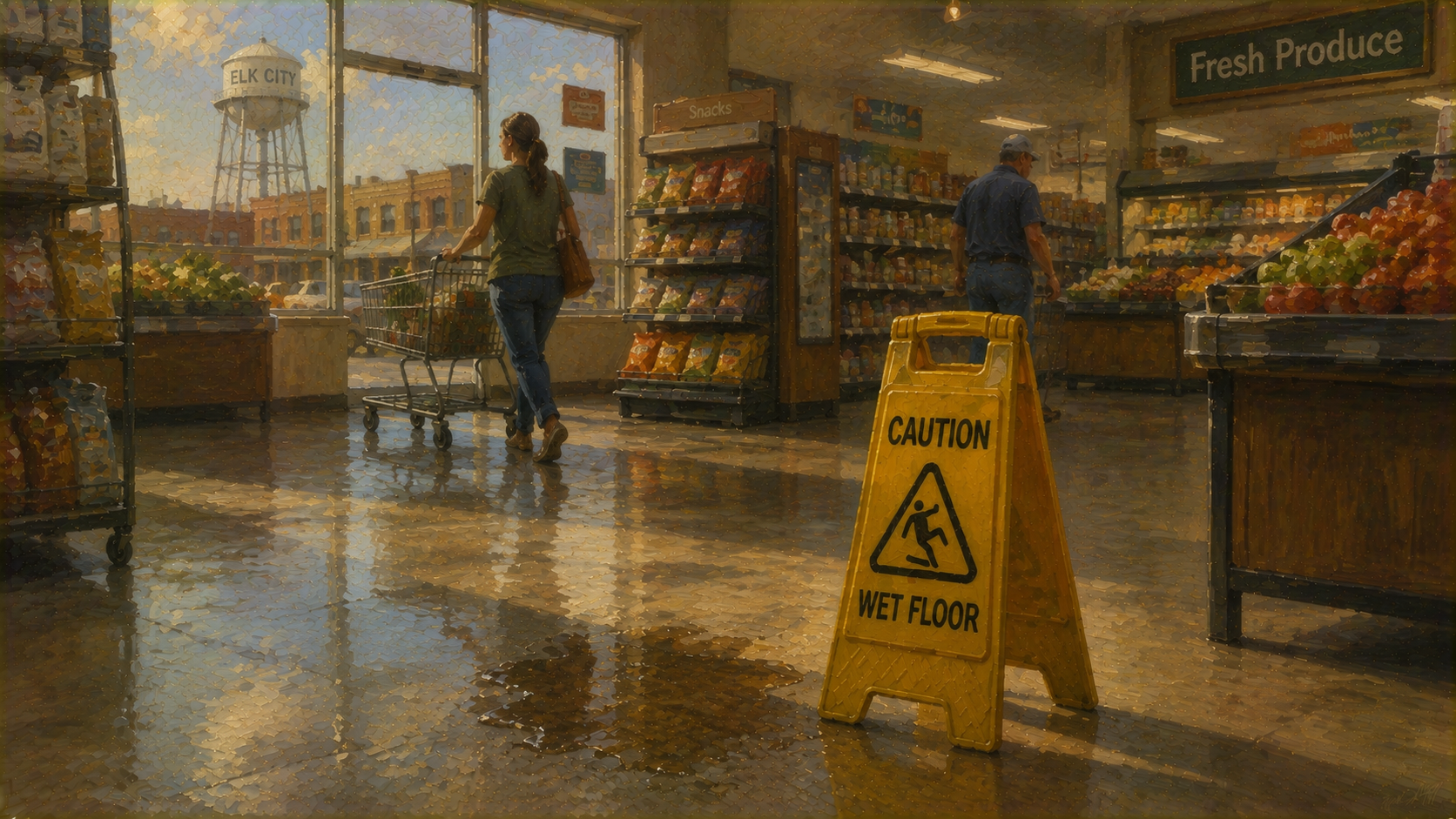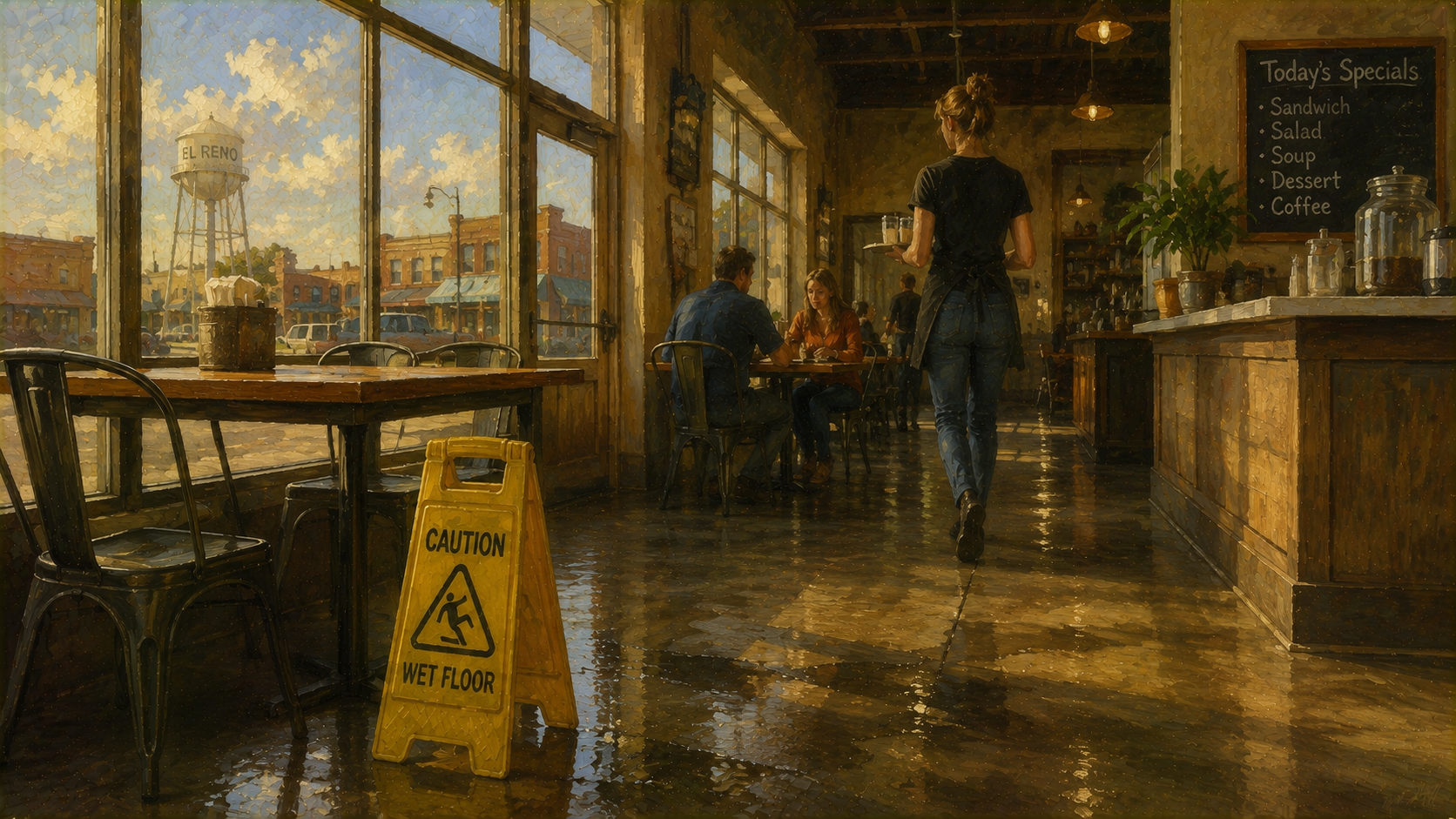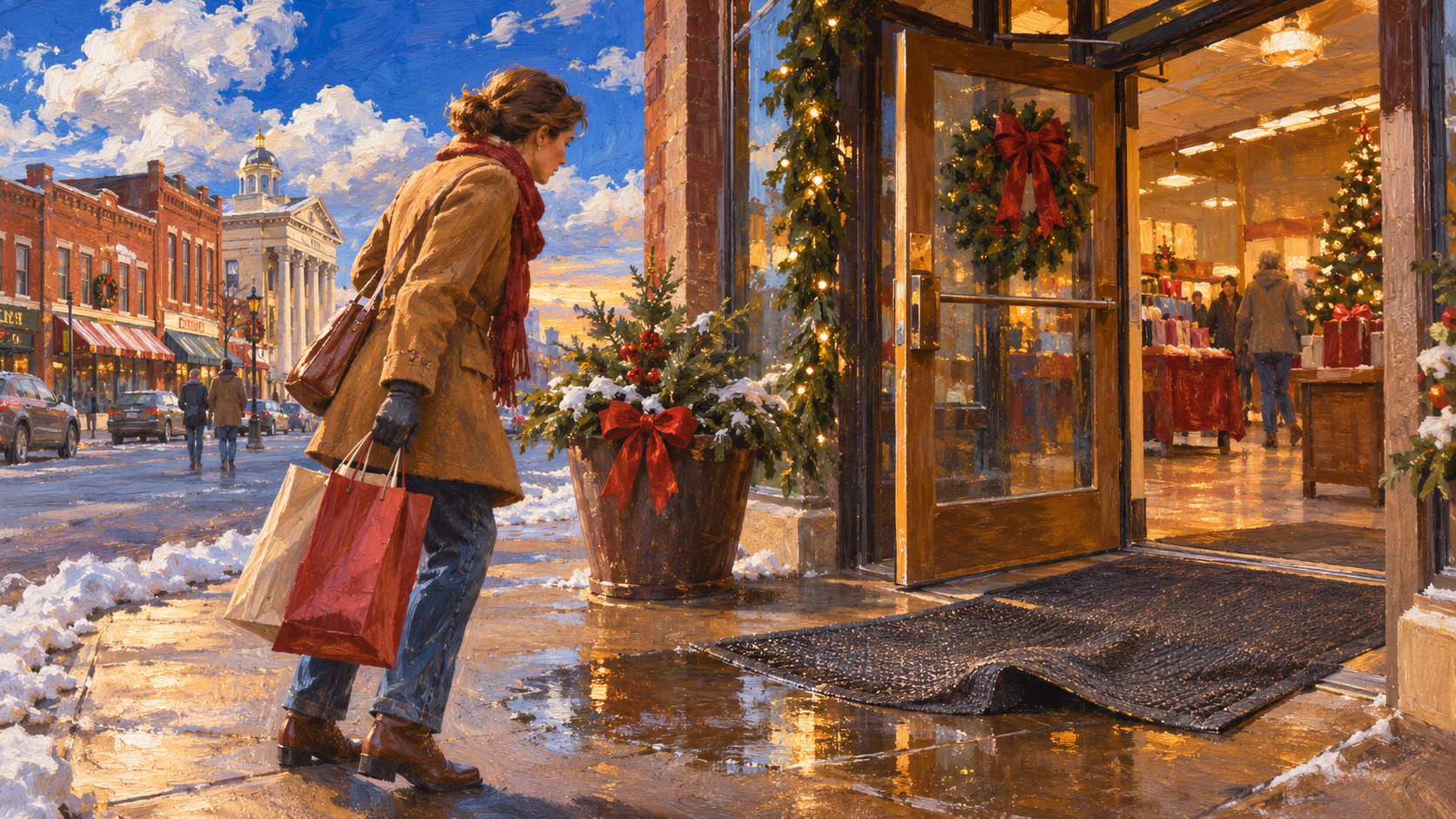
The holiday shopping season fills Shawnee’s stores with crowds, extra merchandise, and wet shoes tracked in from the parking lot. It’s also when many store floors, aisles, and entryways are at their most hazardous. If you were hurt in a fall while shopping, the store may be legally responsible, and the steps you take right away can make a big difference.
Why Holiday Shopping Raises the Risk of Falls
Stores around Shawnee, including the Shawnee Mall area and the retail corridors along Harrison Street, Kickapoo Street, and Federal Street, see their biggest crowds of the year from Black Friday through the end of December. Several factors combine to make falls more likely:
- Crowded aisles and pallets, displays, and boxes left in walkways during restocking
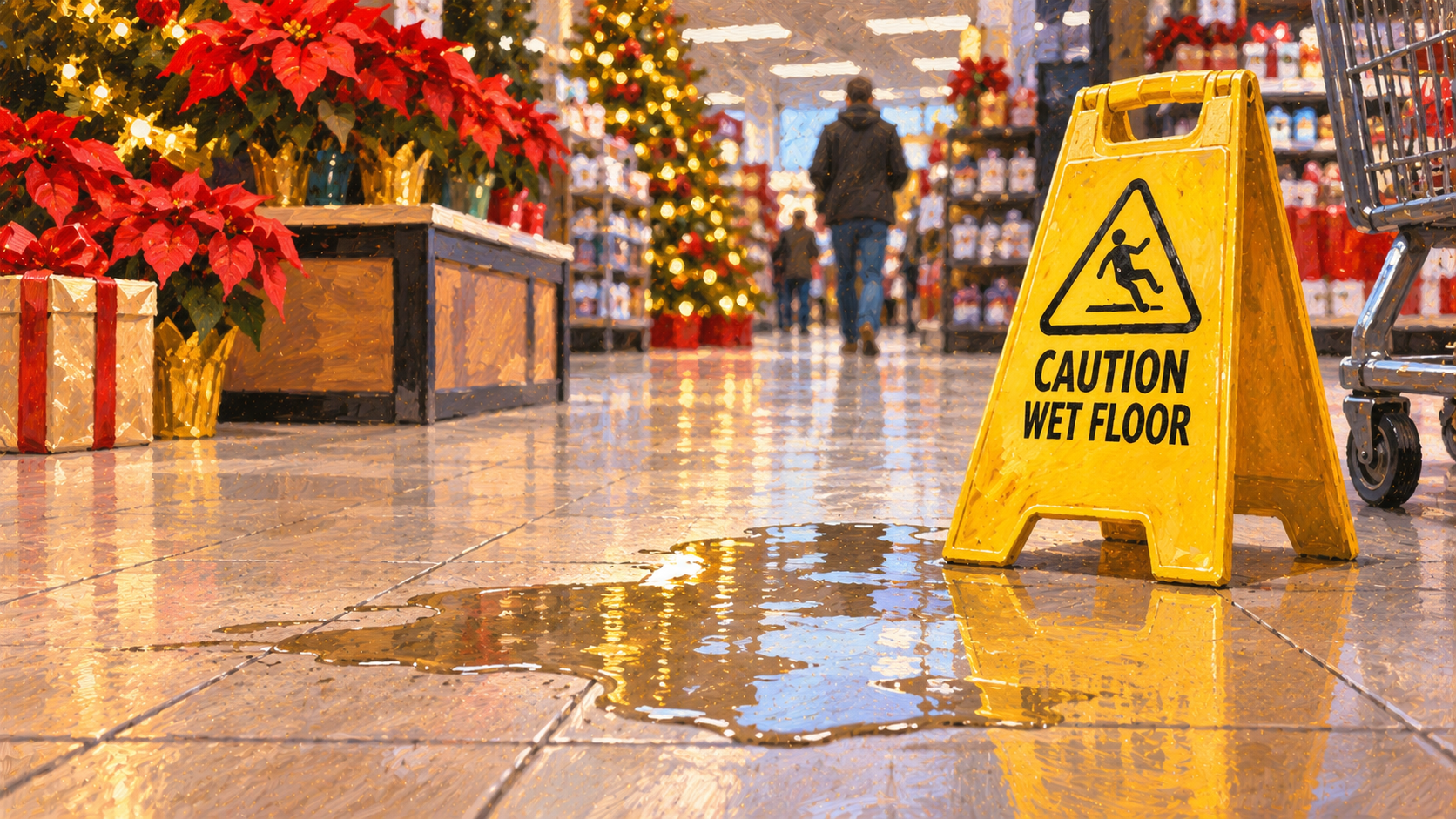
- Wet floors near entrances from rain, sleet, or tracked-in slush
- Seasonal decorations and temporary displays, including cords, mats, and signs that can create trip hazards
- Spills in grocery and food areas that go unnoticed in the rush
- Extra seasonal staff who may not be fully trained on hazard reporting and cleanup
- Icy parking lots and sidewalks when winter weather arrives
- Dim lighting or blocked walkways in busy back rooms and stockrooms
When Is a Store Responsible?
Under Oklahoma premises liability law, a store must take reasonable steps to keep its premises safe for customers. That generally means inspecting for hazards, cleaning up spills promptly, and warning customers about dangers it can’t fix right away. A store may be responsible if:
- It created the hazard, for example by leaving boxes in an aisle
- It knew about the hazard and failed to fix or warn about it
- The hazard was there long enough that a reasonable store should have found it
Stores often argue that a hazard was “open and obvious” or that the customer wasn’t paying attention. Evidence such as inspection logs, staffing levels, and camera footage can answer those arguments.
What to Do After a Fall at a Store
- Get medical attention. Fractures, head injuries, and back injuries are common in falls, and some symptoms are delayed.
- Report the fall to a manager. Ask that an incident report be filled out and request a copy. Describe what happened factually without speculating about fault.
- Take photos. Capture the hazard, the surrounding area, lighting, and any warning signs (or lack of them) before it is cleaned up.
- Get witness information. Other shoppers and employees may have seen what happened.
- Ask about video. Retail stores have security cameras, but footage is often overwritten within days. A prompt written request to preserve it can be critical.
- Save your shoes and clothes from the day of the fall.
- Be cautious with insurance adjusters. The store’s insurer may call quickly and ask for a recorded statement. You can wait until you understand your rights.
Challenges in Holiday Slip and Fall Claims
Retail chains have risk-management teams and insurers whose job is to limit what they pay. Common tactics include arguing that you were distracted, that your shoes were unsuitable, or that your injuries pre-existed the fall. Under Oklahoma’s comparative negligence rule, if you are found partly at fault your recovery can be reduced, and you can be barred from recovering if you are found more than 50 percent at fault.
Deadlines also matter. Most personal injury claims in Oklahoma must be filed within two years of the injury, and evidence like video and maintenance records can disappear much sooner.
What Compensation May Cover
- Emergency and ongoing medical treatment
- Lost wages and reduced earning capacity
- Pain and suffering
- Future medical needs and rehabilitation
Talk to a Shawnee Slip and Fall Lawyer
If you were hurt in a fall at a Shawnee store this holiday season, Aldridge Teasdale can review what happened and explain your options. Learn more about our slip and fall lawyers serving Shawnee, OK. You pay nothing unless we win.
Request your Free Case Review or call (405) 447-HURT today.